Introduction: From Chaos to Control—The Case for Standardizing Work Across Teams
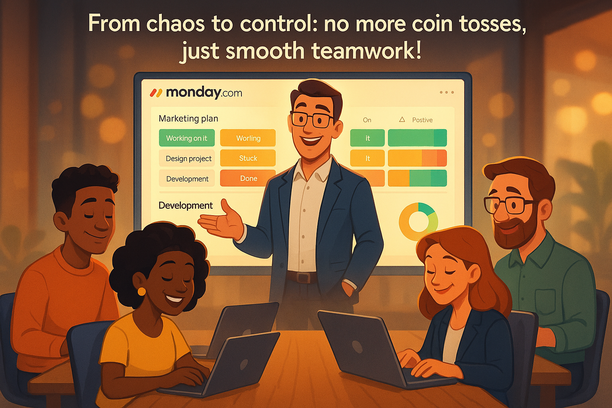
I’ve led teams where “status” meant trawling through chats and spreadsheets, and every handoff felt like a coin toss. The turning point wasn’t more headcount—it was agreeing on how work starts, moves, and finishes. Once we standardized the basics, delivery got calmer, faster, and far less dependent on heroics.
Scattered processes quietly tax leadership time, stall handoffs, and turn delivery into a coin toss. Standardizing how work starts, moves, and finishes restores calm, clarity, and throughput.
- Reusable templates codify best practices so teams stop reinventing the wheel and quality stops varying.
- Automated handoffs and alerts in Monday.com remove status-chasing and errors.
- Shared dashboards add auditability and forecasting, letting leaders coach, not police.
- Onboarding compresses as new hires follow the same blueprint.
Unlocking Operational Consistency with Reusable Process and Workflow Templates
When every team improvises, leaders become bottlenecks and quality swings. Reusable templates turn your best runs into a library that standardizes without stifling nuance.
- Reduce variation and rework with guardrails. Teams adapt 10–20% while the core stays fixed; onboarding ramps 30–50% faster.
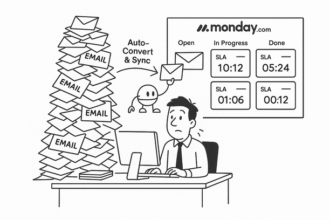
- Automate handoffs, alerts, and SLAs in Monday.com. Service level agreements (SLAs) make expectations explicit; status chasing drops and cycle time tightens.
- Capture tribal knowledge as versioned templates. Governance and auditability are baked in.
- Gain predictable delivery and clearer forecasts. Capacity planning stops guessing.
Faster Onboarding and Predictable Delivery: How Templates Drive Repeatable Success
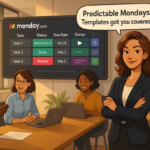
When growth exposes tribal workflows, templates turn chaos into control. Make how we work visible so ramp time shrinks and delivery becomes boring—in the best way.
- Standardized playbooks in Monday.com encode steps, owners, and SLAs. Automations run handoffs, alerts, and status.
- Templates stabilize estimates and surface risk early. Stage gates and checklists prevent rework from slipping in unnoticed.
- Versioning and governance kill drift and tool sprawl. Quality improves while maintenance effort drops.
- Leaders stop policing. Dashboards provide auditability and throughput, so coaching replaces status meetings.
Practical Tools for Scale: Leveraging Monday.com to Automate and Govern Cross-Team Work
As work scales, variance and status-chasing outpace headcount; make Monday.com the spine so standard boards, automations, and permissions keep flow without policing.
- Templates turn tribal steps into versioned playbooks. Onboarding shifts from shadowing to guided lanes.
- Automations orchestrate cross-team handoffs, alerts, and SLAs. Rework falls as responsibilities and timelines are explicit.
- Dashboards replace update meetings. Live capacity, aging, and forecast views make performance self-serve.
- Item and board permissions set guardrails. Flexible for teams, auditable for leaders.
Result: predictable delivery, faster ramps, and fewer fire drills—without adding managers.
Finding Clarity and Relief: Next Steps to Embed Standardization Without Adding Headcount
Standardization turns chaos into calm without adding headcount. Start small: one template, one ritual, let proof accumulate.
- Pilot a reusable template where variance is highest. Track cycle time and defects before and after to quantify impact.
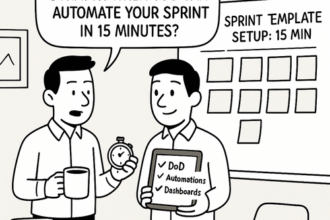
- Run a 15-minute weekly review on a single Monday.com board. Status becomes self-serve and blockers surface early.
- Automate handoffs with owners, SLAs, and alerts. Stop chasing updates and reduce avoidable rework.
- Version templates and retire old docs. Cut drift and keep the path of work obvious.
Want a head start? Lyaxis shares a concise briefing and an optional Monday.com starter board—insight first, decision later—so you can see the patterns applied and get to calmer, consistent execution faster.