
Introduction: Why Cutting 40% of Meetings Boosts Leadership Leverage
When I first cut roughly 40% of my recurring meetings, I expected chaos. What I got instead was leverage: fewer status rituals, more time for strategy, coaching, and decisive execution. Done right, alignment and decision velocity actually rise—because the work moves to where it’s best done, and live time gets reserved for the moments that truly require it.
Takeaway: Less meeting, more momentum, and a calendar that serves the business.
From Meeting Overload to Executive Time Recovery: Embracing Async Updates
Status bloat steals executive hours; async (asynchronous) updates return them. Shift updates to async people actually read; leaders regain 6–8 hours per week and clarity. Move updates to written cadences so meetings become decisions, not broadcasts.
- Async cadences: weekly metrics, roadmap notes, and monthly risks leaders can scan in five minutes.
Decision-Only Meetings: Sharpening Focus and Accelerating Velocity
Use meetings only to decide. When context lives in pre-reads, you trade status sprawl for velocity. Pre-reads carry the load: a one-pager with options, trade-offs, a DRI (Directly Responsible Individual), and a deadline. Live time is only to choose—15–20 minutes, not an hour.
- Decision-only meetings: 15–25 minutes with a pre-read and one owner; in-room deadlines cut cycle time by about 25%.
Time-boxed debate clarifies risk, not history. Decisions end with owners, dates, and a visible log. Track cycle time and meeting NPS (Net Promoter Score); expect about 40% fewer live hours with faster throughput. Async dashboards and nudges kill surprise. Leaders skim once; time‑zone friction fades.
Automated Status Reporting and Dashboards for Real-Time Work Visibility
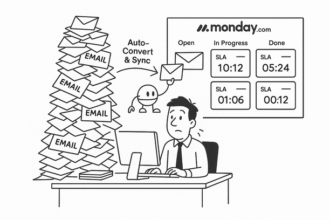
Automate status, keep decisions human. Real-time dashboards replace status meetings with calm visibility and early risk signals—no standing meetings.
- Executive rollups: pull from Jira, Linear, and Notion to show OKR (Objectives and Key Results) health by owner, with red/yellow/green (R/Y/G) thresholds and SLA (Service Level Agreement) timers.
- Alerts: trigger on variance, stale cards, and blocked dependencies; quiet digests cut status time about 40%.
- Decision snapshots: include owner, next milestone, risk, and comments, so live meetings handle only approvals and trade-offs.
- Time‑zone digests: track cycle time, throughput, meeting load, and meeting NPS (Net Promoter Score) to prove impact.
Result: fewer meetings, faster decisions, no surprises. For proven patterns and benchmarks to copy, explore the Lyaxis newsletter for pragmatic templates and dashboards you can adopt at your pace.
Building Durable Async Norms and Measuring Impact Without Meeting Fatigue
Async sticks when norms are simple and measured; otherwise calendars quietly refill. Set response SLAs (Service Level Agreements): four hours for blockers, 24 hours for updates; silence equals consent at 48 hours, so decisions move without meetings. Use lightweight rituals—weekly written updates, 15‑minute decision-only huddles, and status auto-reported to a shared dashboard. Protect maker-time with company blocks and a “no recurring status” default; track maker-time, response latency, and cycle time.
- Norms: response SLAs and time‑zone windows cut back-to-backs by about 40%; measure meeting load and decision cycle time to lock in gains.
Want real benchmarks and templates? Lyaxis shares patterns that cut roughly 40% of meetings—start by exploring the newsletter insights at Lyaxis.
Outcome: faster decisions, fewer meetings, calmer calendars.