
Introduction: Stop Automating Chaos—Find the Right Workflow First
I’ve learned the hard way that automation amplifies whatever it touches. Inject it into a messy workflow and you scale rework, risk, and noise. The wins came only when I slowed down, let the data show where work actually waits, tightened decision points, and piloted one high-signal slice before scaling.
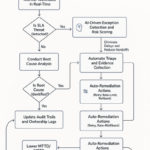
Use AI (Artificial Intelligence) to mine event logs across CRM (Customer Relationship Management), CSM (Customer Success Management), and ERP (Enterprise Resource Planning) and reveal the real paths—not the SOP (Standard Operating Procedure)—flagging wait states, handoffs, and loops. Tighten decision points (owners, thresholds, data-quality gates), then automate. Pilot one high-signal workflow to de-risk and pull forward ROI (Return on Investment).
How AI Reveals Hidden Bottlenecks and Handoff Delays in Your Processes
AI reads timestamps, tickets, and chat trails to reveal where work actually waits and handoffs slip. Process mining maps variants; rework loops and ping‑pong often add 20–40% to cycle time.
- Clustering delays by owner, queue, and channel: surfaces the few handoffs behind most Service-Level Agreement (SLA) breaches.
- Process mining maps variants: rework loops and ping‑pong often add 20–40% to cycle time.
- Root causes pop: missing fields, after-hours approvals, and tool hops drive the bulk of idle time.
- Converting minutes to dollars across volume: shows the first workflow to fix with the least risk.
Quantifying Impact: Prioritizing Workflows for High-ROI Automation
Quantify where minutes, errors, and delays pile up, then fund bigger moves with provable wins.
- Volume × cycle time: rank by hours saved. For example, cutting 3 minutes from 2,000 tickets per month is about 100 hours.
- Error rate × rework cost: 10% exceptions on 5,000 invoices per quarter at $50 each wastes $25,000.
- Cost of delay: 1,500 orders per month at $200 margin is roughly $10,000 per queue day.
- Handoffs/variance: Sales–Legal adds 2–7 days; standardize before bots for compounding impact.
Result: faster throughput, fewer fires, provable ROI.
Building a De-Risked, Data-Backed Automation Roadmap That Scales
- Use AI to mine and rank: analyze tickets, CRM, and operations logs; rank workflows by queue-time variance, handoff density, rework, and SLA risk—tackle the top outlier.
- Pilot the smallest slice touching revenue: add exception guardrails and a manual fallback so you can learn fast without disruption.
- Instrument outcomes: track cycle time, error rate, and capacity freed; set a clear kill/scale threshold.
- Scale only what clears the bar twice: codify the playbook so the next rollout is faster and safer.
Next Steps: Gain Clarity and Confidence with Our Insight-Driven Newsletter
Let your data pick the first fix.
- AI exposes where work waits: queue time, rework loops, and handoff lag across tools become visible.
- Opportunity scoring: rank by time saved, dollars unlocked, and risk reduced—your de‑risked roadmap.
- Messy data isn’t a blocker: pattern detection fills gaps to guide decisions.
- Visible delay costs align stakeholders: faster consensus, smaller rollout risk.
Lyaxis’ newsletter delivers calm, no‑fluff breakdowns, templates, and tested picks—useful first, affiliate second. Skim for the method now; adopt tools only when the math works. Clarity first, automation second—fewer fires, faster throughput, measurable ROI. No tool switch required to get value from the guidance.