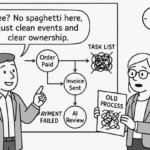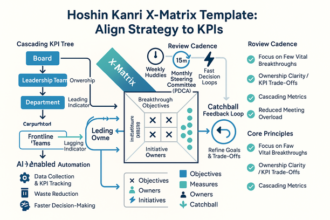
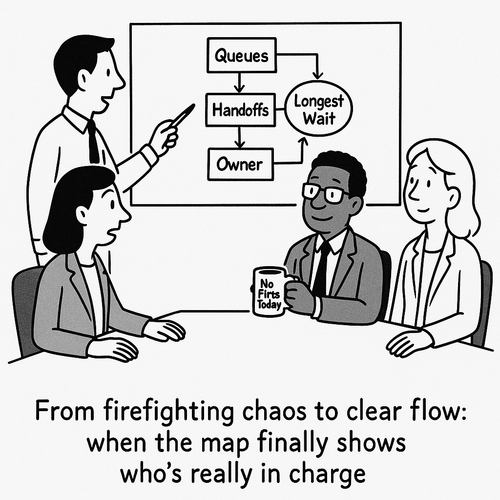
I learned the power of process mapping the hard way—during a quarter when escalations spiked, teams were exhausted, and everyone had a different story about “what’s broken.” One afternoon, we sketched the real flow on a whiteboard. In minutes, opinions gave way to evidence. The friction was visible, the next experiment was obvious, and we left with a shared plan instead of another blame-filled meeting. This article distills how visual process maps become a practical leadership tool to align teams, reduce firefighting, and accelerate outcomes.
Introduction: Harnessing Process Mapping as a Leadership Catalyst
Process mapping, used well, is a leadership catalyst: it turns opinions into evidence and firefighting into flow. Simple visuals clarify priorities, expose friction, and align work on outcomes.
- Make ownership and decision rights visible; accountability rises and onboarding accelerates.
- Surface hidden queues and broken handoffs; target the few fixes that shrink cycle time.
- Replace siloed Key Performance Indicators (KPIs) with end‑to‑end measures; teams optimize the whole.
- Give leaders a coaching canvas; conversations shift from blame to design.
Curious how this looks? Lyaxis shares distilled maps and lessons via a low‑noise newsletter—insight first, tools later. Result: fewer escalations, smoother flow, and reclaimed leadership time.
From Documentation to Dialogue: Shifting Culture Through Systems Thinking
Turn documentation into dialogue. Systems thinking reframes “who erred?” to “what conditions created this?”—making improvement safe and shared.
- Map the end‑to‑end flow to reveal hidden queues and clashing Key Performance Indicators (KPIs); align on one customer metric.
- Expose handoffs and decision rights; close ownership gaps that fuel rework.
- Ground meetings in the map, not opinions; target few leverage points.
- Use the map as an onboarding spine; scale without bureaucracy.
Curious how this plays out? Lyaxis turns static Standard Operating Procedures (SOPs) into living maps leaders use to spot bottlenecks in minutes—a way to gain insight before change. Takeaway: fewer fires, faster flow, leadership time back.
Guiding Improvement Conversations with Visual Process Maps
Maps turn opinions into observable flow. They let leaders steer culture, not bureaucracy.
- Ask for leverage: Where does work wait longest? Who decides at this gate? What breaks if we remove this step?
- Expose the constraint: Mark queues and handoffs; circle the longest wait. That’s your first experiment.
- Keep momentum: 15 minutes at the map, one change, one owner, next check‑in inked.
- Align metrics to flow: Track lead time and first‑pass yield (FPY) end to end, not siloed KPIs.
Lyaxis offers field‑tested prompts and patterns in a low‑noise newsletter. Smallest fix at the bottleneck cuts cycle time and frees leadership hours.
Breaking Silos and Clarifying Ownership for Seamless Handoffs
Process maps are leadership instruments, not compliance art. Used well, they expose real handoffs and decision rights that determine speed and calm.
- Reveal gray zones: make invisible queues visible and stop ping‑pong work.
- Define ownership by outcome: one accountable owner per step; helpers named.
- Align metrics to flow: track handoff latency and rework, not silo throughput.
- Prioritize fixes by friction: attack transitions causing delays and escalations.
Lyaxis surfaces hidden handoffs and ownership patterns—explore the insights to guide your next move. Takeaway: clearer ownership shrinks cycle time, reduces rework, and frees leaders from firefighting.
Building a Durable Habit of Cross-Functional Alignment and Continuous Improvement
Alignment endures when process maps become weekly leadership conversations, not paperwork. Light, repeatable cadences compound into trust, speed, and resilience.
- Map the end‑to‑end flow together; surface handoffs, queues, and decision rights.
- Run 30‑minute improvement huddles; select one constraint, test for two weeks, measure rework.
- Use shared language — entry/exit criteria, owner, Service Level Agreement (SLA) — to cut finger‑pointing and ramp time.
- Rotate map stewards; spread systems thinking and clarify escalations.
Curious how this works in practice? Lyaxis shares field notes and visual templates to make these habits stick—leaders gain insight before adding tools. Result: fewer fires, faster flow, more time to lead.