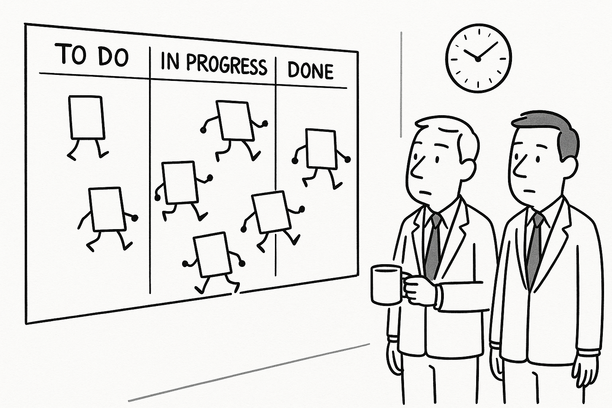
I learned the hard way that most of our delivery delays weren’t from “big problems” but from tiny waits between columns on a Kanban board. After a few pilots where cards advanced themselves on simple rules, the change was immediate: handoffs happened without pings, status chasing disappeared, and our cycle times became predictably shorter. This article distills what worked, the triggers that matter, and how to roll it out without adding meetings or headcount.
Why Automating Kanban Card Moves Transforms Workflow Efficiency
When cards move themselves on rules, work stops idling at column borders. Automation turns stage changes into immediate actions, exposing real bottlenecks without more meetings.
- Instant handoffs: approvals auto-route, docs attach, SLAs (service level agreements) start; rework drops.
- Predictable flow: WIP (work in progress) limits enforce, blockers escalate; cycle time shrinks, throughput steadies across teams.
- Single source: status syncs to Slack, email, CRM (customer relationship management); full audit trail for compliance.
- Lean coordination: no status chasing; leaders reclaim hours for strategy.
Curious where to start? Lyaxis surfaces low-friction triggers and safe defaults—our newsletter shares field-tested patterns to copy, so delivery gets faster without adding meetings or headcount.
From Manual Handoffs to Seamless Transitions: Real Impact on Cycle Times
Manual handoffs hide in your Kanban. Rule‑based transitions turn each move into a reliable workflow, cutting queues and rework.
- Ownership: On column change, auto‑assign the next owner and set an SLA timer; idle time drops.
- Quality: Gate entry with required fields and approvals; rework falls and audits stay clean.
- Data flow: Sync CRM/finance/docs on transition; duplication disappears.
- Visibility: Notify stakeholders and flag WIP/blocked work; status chasing stops.
Curious where your waits sit? Our newsletter brief shows before/after maps and typical cycle‑time deltas—skim for ideas, adopt at your pace. Net: faster throughput without headcount.
Key Triggers to Streamline Approvals, Notifications, and Compliance
Stage-change triggers eliminate handoff delays and create audit-ready flow.
- On status transition: auto-assign a role-based approver, block promote until approved, and timestamp decisions.
- Start SLA clocks on entry: warn before breach, escalate to backup, and log response times.
- Validate exit criteria: required fields, docs, budgets—to prevent downstream rework.
- When dependencies complete: notify owners, move cards to Ready, and sync CRM/ERP (enterprise resource planning) fields.
- For spend or sensitive data: route Finance/Legal, limit visibility, and capture an immutable trail.
Result: shorter cycle time, fewer errors, predictable delivery—without more headcount. The Lyaxis newsletter shares practical trigger patterns; when useful, we wire them in quietly.
Overcoming Common Adoption Barriers to Lean Office Workflow Automation
Automation anxiety is real: fear of losing control, tool fatigue, messy processes. Small, reversible triggers tied to Kanban stage changes cut handoff delays without upheaval.
- Co-design rules: when a card moves, auto-assign an owner, set SLA, attach a checklist; leaders keep override and audit.
- Pilot one flow: run it for two weeks with rollback; expect fewer pings and shorter cycle time.
- Route approvals and notify stakeholders automatically: status pages replace chasing.
- Sync CRM/docs from cards: reduce duplicate entry and maintain audit trails.
- Result: predictable throughput with less coordination.
Next-Level Operational Efficiency: Scaling Without Adding Headcount
Scale without headcount by standardizing handoffs, automating stage transitions, and designing for exceptions. Cut delay and errors, freeing leadership for high-value work.
- Trigger on board moves: auto-assign owners, request approvals, create docs, and sync data—handoffs in minutes, not days.
- Enforce WIP and SLA timers: surface stuck work, protect throughput, and predict delivery.
- Orchestrate the 80% as defaults: and route exceptions with clear owners—fewer meetings, less rework.
- Instrument telemetry and audit trails: across stages for compliance and bottleneck insight.
Curious how to wire this? Lyaxis’ field guide shows patterns you can copy before adopting tools. Result: higher throughput, predictable SLAs.