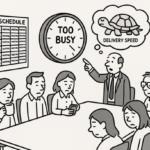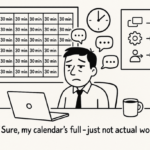

I’ve led teams through those weeks when it felt like the only job was swatting alarms. The more we watched dashboards, the less we actually led. The turning point was adopting manage-by-exception: we redesigned alerts so leaders saw only what truly required judgment. Everything else flowed quietly to the right owners, with the right context, at the right time. This article distills what worked—how to move from firefighting to flow, with practical guardrails you can start using today.
From Firefighting to Flow: Reimagining How Leaders Engage with Alerts
Firefighting is expensive; your best attention becomes the bottleneck. Shift to manage-by-exception alerts so leaders see only what truly needs a decision.
- Batch and brief: Roll low‑severity items into hourly digests with trend, owner, and next step.
- Thresholds with intent: Use Green/Amber/Red by metric and time window; escalate by channel only when persistence hits.
- Single pane: Consolidate tools into one route; leaders view exceptions while teams handle the noise.
- Preempt SLAs (Service Level Agreements): Send early warnings before breach with a runbook, an owner, and an ETA (estimated time to resolve).
Do this well, and leaders make faster calls while teams stay in flow.
Mastering Manage-by-Exception: Setting KPIs, Thresholds, and Ownership
Manage-by-exception moves you from dashboard babysitting to focused action. You see only what merits leadership attention.
- KPIs (Key Performance Indicators) that matter: Pick 5–7 metrics tied to customers and cash; drop vanity metrics.
- Thresholds that trigger: Set Green/Yellow/Red with time bounds and SLAs (Service Level Agreements). Example: activation rate <20% for 2 hours pages Growth.
- Crisp ownership: Assign one DRI (Directly Responsible Individual) per KPI, a backup, and a clear runbook.
- Smart escalation: Route by severity, time, and channel; auto‑quiet on recovery.
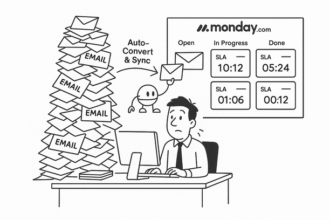
- One inbox: Consolidate, deduplicate, and add context so exceptions land in a single queue.
Cutting Through Noise: Designing High-Signal Alerts to Reduce Alert Fatigue
Alert floods turn leaders into human dashboards; flow returns when alerts carry context and only fire on exceptions. Design them to route to the owner at the right moment.
- Ownership‑first routing: Map every KPI to a DRI (Directly Responsible Individual) and a channel; escalate by severity and time.
- Context, not pings: Include trend, scope, revenue at risk, and a one‑click runbook.
- Noise‑killers: Deduplicate, correlate, and window alerts so one incident equals one page.
- Meaningful thresholds: Tie to SLOs (Service Level Objectives) and SLAs (Service Level Agreements) plus leading indicators (e.g., checkout failures >0.7% for 5 minutes).
Automated Escalation: Creating Seamless, Context-Aware Response Pathways
Escalation should feel like a relay, not a siren. Manage-by-exception routes only the right issues, with context, to the right person—fast.
- Signal over noise: Set thresholds by revenue risk and time‑to‑breach, not vanity. Example: churn risk >8% for Tier A triggers within 5 minutes.
- Context travels: Include account timeline, owner, SLA (Service Level Agreement), and a suggested next step—handoffs take seconds.
- Right channel: P1 (highest‑priority) = pager; P2 (high‑priority) = Slack thread; P3 (medium‑priority) = daily digest. Keep one queue across tools.
- Human‑in‑the‑loop: Accept, snooze, or reroute—each action trains the system.
Building a Calm, Predictable Operating Rhythm with Exception-Driven Operations
Firefighting steals judgment; a calm, exception‑led rhythm restores it. Make calm the default by codifying guardrails and cadence.
- Set thresholds, not tabs: Use KPI (Key Performance Indicator) guardrails and SLA (Service Level Agreement) tripwires; everything else stays silent.
- Unify alerts: Create one risk inbox with clear owners, severity, and deadlines.
- Escalate by design: Route on impact and clock; choose channels that match urgency.
- Foresight rituals: Let dashboards set cadence; weekly exception readouts and runbook updates turn noise into patterns.
The payoff: fewer interrupts, faster decisions, and scale without adding more managers.
If you want practical templates, case studies, and calm‑ops guardrails you can adopt at your pace, explore the Lyaxis calm‑ops newsletter: https://lyaxis.com/category/newsletter/.