Protect Deep Focus: Reduce Context Switching and Build an Operating Rhythm That Scales
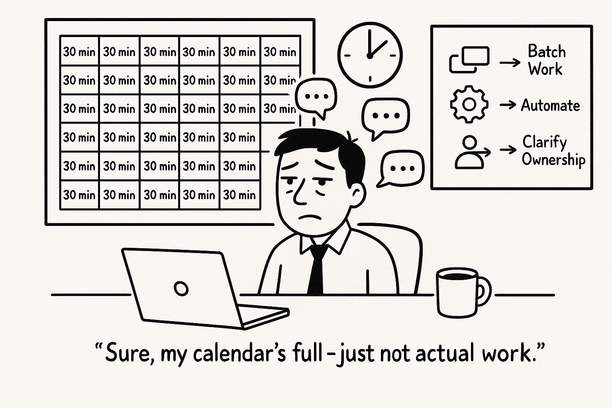
I learned the hard way that a busy calendar doesn’t equal a productive team. My week looked full—30-minute slices, constant pings, and “quick” check-ins—but the work kept slipping. When we finally measured the interruptions, we saw how much attention residue was draining quality and speed. What changed everything wasn’t adding headcount; it was batching work, clarifying ownership, and wiring a few smart automation triggers. This article lays out the exact patterns that cut our cycle times and raised quality—practical moves you can put to work now.
Understanding the Hidden Cost of Context Switching in Knowledge Work
Context switching is an invisible tax on knowledge work. Each micro‑interruption leaves attention residue; at scale, it quietly burns 20–40% of capacity.
- Calendar tells on you: fragmented 30–60 minute blocks plus 15‑minute pings push resumes toward 23 minutes and double cycle time.
- Chat exposes it: status pings post‑handoff signal missing automation; auto‑updates kill check‑ins.
- Ownership clarifies it: single owners and crisp approvals end ping‑pong and rework.
- Batching fixes it: group like work, fewer mode changes, higher quality.
Prefer relief with numbers? Lyaxis maps your switch‑tax and shares low‑noise insights you can use now; tools only when they earn their keep.
How Workflow Batching and Automation Triggers Protect Deep Focus
Deep focus compounds quality, yet switching steals up to 40% of productive time and takes ~23 minutes to refocus. Protect it with batching and event‑driven triggers.
- Batch by intent: review windows at 3pm; outbound replies at 4pm—one mental model, faster throughput.
- Trigger by event: “Ready for review” auto‑assigns; PR (pull request) merged posts release notes; “Blocked” opens a help ticket for a triage slot.
- Fence maker time: DND (Do Not Disturb) + queue receipts replace ad‑hoc pings.
- Clarify ownership: single approver; auto‑routed steps kill ping‑pong.
Skim the Lyaxis Focus Ops brief for patterns; when useful, Lyaxis can wire your stack. Result: fewer handoffs, faster cycles, better output.
Clarifying Roles and Ownership to Eliminate Interruptions and Rework
Every “who owns this?” injects friction. Context switching costs ≈23 minutes to refocus and quietly compounds rework.
- Crisp swimlanes: assign single‑threaded owners, so work stops ricocheting.
- RACI‑lite on tickets/docs: reveal Decision and Approver in five seconds—RACI stands for Responsible, Accountable, Consulted, and Informed.
- Decision logs: freeze choices; the next owner executes without relitigating.
- Batched reviews with clear SLAs: cut pings and calendar creep—SLAs are Service Level Agreements (explicit response/turnaround expectations).
- Automation triggers: move statuses and handoffs silently, lowering errors.
Lyaxis Field Notes distills these patterns into lightweight templates and real examples—use what fits, keep momentum. Takeaway: fewer interruptions, shorter cycles, and higher quality without adding headcount.
Balancing Focus and Efficiency: Reducing Cognitive Load Without Adding Headcount
Every tab change taxes IQ (intelligence quotient) and throughput. Each switch costs ~23 minutes to refocus—at scale, it’s hidden headcount.
- Set defaults that remove choice: one intake + brief template per channel. Fewer forks, faster starts.
- Standardize recurring moves: embed checklists in tools so handoffs run the same way.
- Prune low‑signal metrics: one north star, three drivers. Fewer dashboards, fewer pings.
- Batch by cognitive mode: maker mornings, manager afternoons. Timebox inbox sweeps and reviews.
- Clarify ownership and triggers: auto‑status updates, explicit approvers. Less ping‑pong, higher quality.
Lyaxis Field Notes pinpoint what to keep, cut, and automate—clean signal, shorter cycles, no extra hires.
Building a Scalable Operating Rhythm for High-Quality Output and Leadership Leverage
A scalable rhythm makes quality habitual and gives leaders leverage without more meetings. Context switching burns focus—each hop costs ~23 minutes.
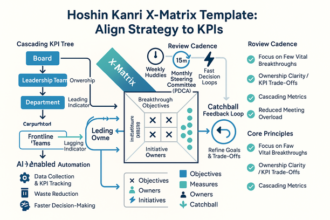
- Batch deep work by stream: single intake windows, shared definitions of done, and weekly ops (operations) reviews replace daily thrash.
- Automate handoffs and status from the source of truth: triggers update dashboards; SLAs (Service Level Agreements) beat “ping me.”
- Clarify ownership and approvals: a DRI (Directly Responsible Individual) plus two‑stage reviews—checks by bots, judgment by humans—kills ping‑pong.
- Rituals that compound: metrics, lightweight retrospectives, decisions logged.
Lyaxis maps what to automate vs humanize—insight first via our newsletter; tools second. Net: fewer switches, faster cycles, higher quality.