Introduction: Tackling the Coordination Tax to Scale Without Hiring
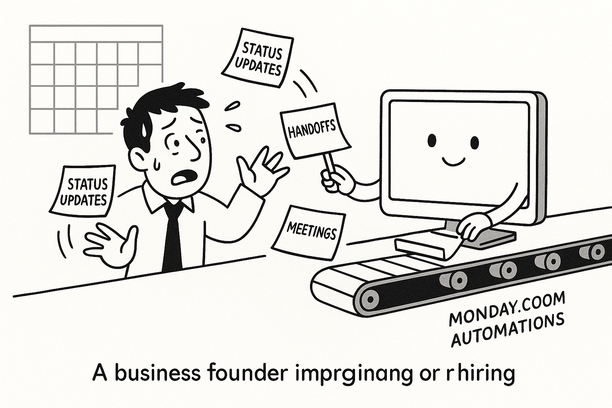
I’ve felt that awkward plateau where revenue is ready to grow, but my calendar isn’t. It wasn’t a sales problem—it was me playing traffic cop: chasing statuses, nudging handoffs, and sitting in update meetings instead of building. Growth stalls not from skill but coordination—status pings, handoffs, and meetings drain capacity.
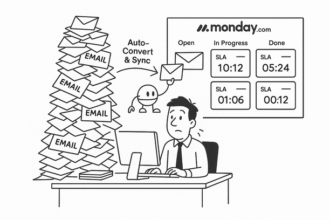
Before adding payroll, there’s a smarter path. Monday.com can shoulder the coordinator work: auto-assign next owners, route approvals, and mirror statuses. Service Level Agreement (SLA) timers and reminders nudge work forward; alerts land in Slack. Dashboards surface blockers and cycle time so leaders act once, not all day. Cut the coordination tax, reclaim capacity, and scale revenue without adding payroll.
For a calm, insight-first path, the Lyaxis Brief distills the highest Return on Investment (ROI) Monday automations, with clear signals on where to start.
Why Automate Coordination Work? The Smart Alternative to Payroll Growth
Coordination steals your highest-paid hours; hiring people to chase statuses scales cost, not throughput. Automating the handoffs and nudges lets you grow output before headcount.
- Hire vs. automate: Monday.com can route handoffs, auto-remind owners, standardize approvals, and sync status to Slack and Customer Relationship Management (CRM) systems—cutting errors and cycle time.
- ROI lens: Target high-volume steps with repeatable triggers and costly misses; many automations pay back in weeks versus a full-time salary.
- Leadership relief: Approvals flow to the right executive with clear deadlines; dashboards show work-in-flight—no more all-day traffic-cop duties.
- Safer scaling: Human-in-the-loop guardrails keep people in charge of key steps, preventing over-automation and easing change management.
Quiet next step: Lyaxis field notes map the first Monday.com automations that fund themselves. Net: more maker time, better margins.
Unlocking Operational Leverage with Monday.com Automations
Coordination, not demand, is often the constraint. Monday.com automations convert pings into predictable flow—scaling output before payroll.
Automate the coordinator: auto-assign the next owner, route approvals to the right person, and mirror statuses across key boards. Nudge, don’t chase: Service Level Agreement (SLA) timers and reminders move work, with alerts posting to Slack. See, then intervene: dashboards expose blockers and cycle time so leaders step in only where it matters. Codify handoffs now to defer coordinator headcount while improving delivery consistency.
Lyaxis’s short brief shares copy-ready patterns and risk checks—insight first, no pitch. Result: fewer misses, faster cycles, and clearer margins you can trust.
Real-World Automation Use Cases: Handoffs, Status Syncs, Reminders, and Approvals
Growth stalls when leaders become traffic cops. Before hiring a coordinator, let Monday.com handle the handoffs, updates, and nudges:
- Handoffs: When Status = Done, spin up the next task with owner, Service Level Agreement (SLA) and dependencies—no dropped relays.
- Handoffs with guardrails: Auto-assign the next owner on Ready, require a due date, and attach a checklist—cycle times drop from days to hours.
- Status syncs: Mirror updates across boards and client views so there’s one signal and no chasing; add a source-of-truth rule to avoid loops. Keep forecasts honest by syncing key fields to your Customer Relationship Management (CRM) system.
- Reminders: Timed nudges before SLAs with snooze and escalation deliver a double-digit lift in on-time tasks.
- Approvals: Route to the right executive with deadlines and auto-escalation; lightweight, time-boxed decisions auto-advance work so founders stop blocking.
- Integrations: Nudge in Slack or Microsoft Teams, push invoices, and log time—systems talk so coordinators don’t have to.
Lyaxis distills the patterns and guardrails—skim the insights to de‑risk your first automations.
Building Predictable, Scalable Processes that Free Founder Time and Boost Margins
Use Monday.com automations before adding headcount to build processes that protect time and margins:
- Handoffs that stick: Closed‑Won auto-spawns tasks, owners, due dates, and escalations.
- Approvals that move: Route to the right executive, block progress until sign-off, and timestamp the decision.
- Status without chasing: Board syncs, Slack nudges, and dashboards for cycle time and risk.
- Right-size hiring: Track automation touches versus manual work to justify or defer roles.
Implementing these patterns leads to fewer misses, faster cycles, and cleaner margins—without new payroll. For field-tested Monday.com patterns and pitfalls to avoid, dip into the Lyaxis newsletter and get ideas that free founder time and lift margins.