
Introduction: From Meeting Overload to Radical Transparency with Kanban
I used to spend whole afternoons cycling through status meetings, chasing slide decks, and leaving with more questions than answers. The work didn’t speed up, but the oversight did. The turning point came when we replaced reports with a simple, shared Kanban board: flow became visible, decisions got calmer, and the “real” status stopped hiding in spreadsheets.
Status meetings consume hours while hiding reality. Kanban flips it: flow makes truth visible and decisions calmer. Replace recurring syncs with a shared board of work, blockers, and owners; leaders scan exceptions, not attend status. WIP limits and aging alerts surface risk early; intervention is targeted, not micromanagement. Team boards roll up to executive views; truth replaces slide decks and chasing. Flow metrics—cycle time, throughput, forecast ranges—enable confident commitments. Integrate with existing tools to avoid friction and shadow work. Result: fewer meetings, faster truth, more time for strategy.
Want a practical lens on how leaders put this into practice? The Lyaxis newsletter unpacks executive Kanban patterns, roll-ups, and dashboards—insight first. Explore it here: Lyaxis Newsletter.
Why Status Meetings Fail: The Hidden Costs of Outdated Updates
Status meetings feel safe, but they’re expensive. Slide decks are lagging signals that trigger fire drills instead of decisions.
- Time and context switching compound. Hours spent prepping decks trade against delivery.
- Conflicting truths proliferate. Stale reports hide risk until review day.
- Shadow work thrives. Hidden queues and handoffs slow flow and forecasting.
- Control erodes trust. Meeting-driven oversight breeds micromanagement.
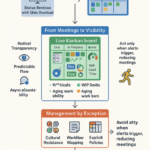
Shift to live Kanban with executive roll-ups and exception alerts to manage by exception. Quantify flow, see blockers in real time, and intervene only when needed. Takeaway: fewer meetings, steadier outcomes.
Harnessing Real-Time Kanban Visibility for Management by Exception
Replace status meetings with live Kanban signals that surface only exceptions. Step in when flow breaks; otherwise, let teams ship.
- Radical transparency, not surveillance: shared boards show Work in Progress (WIP), blockers, and Service Level Agreements (SLAs) in real time.
- Early risk, not late surprises: aging-in-stage and throughput alerts flag stuck work long before reviews.
- One truth, not tool sprawl: integrate Jira, Trello, and GitHub into executive roll-ups; kill slide decks.
- Governance, not micromanagement: policies auto-raise WIP, due-date, and scope variances.
Result: faster flow, fewer meetings, forecastable delivery, and leadership time back.
Building a Single Source of Truth: Executive Dashboards and Flow Metrics
Status meetings hide more than they reveal. An executive dashboard built on flow—cycle time, WIP, throughput—creates real-time truth and enables management by exception.
- Cycle time exposes aging work: intervene early before scope swells.
- WIP reveals overload and hidden queues: limit to regain predictability.
- Throughput trends turn hope into capacity-based forecasts: commit with confidence.
- Flow efficiency contrasts wait time versus active work time: remove blockers, not trust.
- Cross-team Kanban roll-ups surface systemic constraints: fix the system, not scapegoats.
Integrate with existing tools to avoid friction and shadow work—let data flow once and roll up everywhere leaders need to see it.
Achieving Cultural Shift: Embracing Transparency Without Micromanagement
Transparency without micromanagement comes from shared rules and real-time flow, not more meetings. Replace status check-ins with Kanban visibility so leaders manage by exception and teams keep autonomy.
- Turn policies into clarity: WIP limits, definitions of done, and service SLAs everyone sees.
- Make blockers undeniable: aging, blocked, and off-SLA cards surface automatically.
- Create one truth: integrate team boards and roll up to executive views—no slide-chasing.
- Protect safety: agreements focus on improving flow, not watching people.
For patterns that work—exception rules, roll-up designs, and benchmarks—see the Lyaxis Field Notes: Lyaxis Newsletter. Outcome: fewer meetings, faster delivery, and earlier risk detection—without sacrificing trust.