
Introduction: Master the 15-Minute Rule to Reclaim Team Time
I stumbled into the 15-Minute Rule after a quarter where my calendar was full, my team was busy, and yet the needle barely moved. The culprits were all the “it’ll only take a minute” tasks that fragmented our focus. Once we treated every sub-15-minute task as a systems decision—automate, delegate, or delete—we unlocked hours each week without adding headcount or tools. This article distills the playbook we now use to make micro-efficiency a habit.
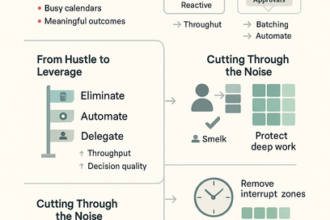
The 15-Minute Rule reframes every sub-15-minute task as a systems decision: automate, delegate, or delete. Instead of doing “quick” work now, you design it out. This cuts context switching (interruptions can cost ~23 minutes to refocus) and compounds time savings across the team.
How it works
- The rule: If a task takes <15 minutes, do not do it by default. Triage it into automate, delegate, or delete. Only do it yourself if it’s uniquely high-leverage or time-critical.
- Mindset: You are building a machine. Every “quick task” is either a one-time fix or an every-time drain.
Decision framework (guardrails included)
- Automate when: Recurs 3+ times/month or across 2+ people; inputs/outputs are predictable; low risk. Use built-ins first: email rules/filters, calendar booking windows, saved replies, templates, spreadsheet formulas, checklists.
- Delegate when: Requires judgment but is teachable. Provide an SOP, template, definition of done, examples, and a quality gate (spot-check or threshold-based approval).
- Delete when: Not tied to quarterly goals, duplicates info, or exists due to habit. If unsure, batch to a “Friday Sweep” and reassess.
- Never triage away: Compliance, money movement above thresholds, customer-impacting issues without rollback. Require owner or 2-step review.
Daily 15-minute triage ritual
- Pull all <15-minute tasks from inboxes/Slack/tickets.
- Label A (Automate), D (Delegate), X (Delete), or Do (only if truly unique/urgent).
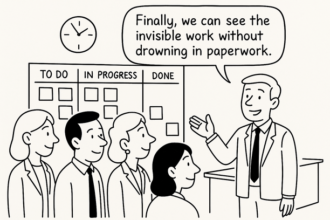
- Move A/D/X to a simple Kanban (To Triage, In Progress, Done) in your existing tool.
- Create/attach SOPs, templates, and checklists for D.
- Log A items into an “Automation Backlog” with trigger, input, output, owner.
- Timebox any Do items; schedule, don’t switch.
Measure weekly
- Minutes eliminated, # automations shipped, first-pass delegation quality, context switches avoided, SOPs added, backlog burndown.
Real-world examples
- Status pings → weekly auto-report + saved reply.
- Calendar Tetris → booking rules + no-meeting blocks.
- Expense nudges → monthly reminders.
- Low-risk approvals → checklist + delegate under threshold.
Identify and Triage Sub-15-Minute Tasks: Automate, Delegate, or Delete
Run a 10-minute daily triage on everything that takes under 15 minutes. Label candidates “U15” in your inbox, Slack, calendar, and task board. Then apply this decision tree.
Decision rules
Delete
Delete if: no customer impact, no KPI movement, duplicative, or “FYI-only.”
Actions:
- Unsubscribe/mute at source, merge/kill the recurring meeting, remove yourself from CCs, set “No-Do” rule for similar asks.
Examples:
- “Got it” replies, duplicative approvals, low-signal Slack channels, weekly status calls with no decisions.
Automate
Automate if: occurs ≥3/week, steps are repeatable, trigger is obvious, and you can use native features.
Actions:
- Document Trigger → Steps → Owner, add to “Automation Backlog,” implement the simplest path using existing tools.
Examples:
- Email filters (route invoices to finance, auto-archive newsletters), canned responses/templates (intro, agenda, follow-up), saved report views, spreadsheet formulas for rollups, recurring reminders, calendar auto-accept for internal holds.
Delegate
Delegate if: requires human judgment, exceptions >10%, or outputs vary by context.
Actions: assign an owner and attach a 1-page SOP with:
- Purpose/KPI
- Inputs and source links
- Steps checklist
- Definition of Done (format, recipients, deadline)
- Quality checkpoints (spot-check 1 in 5, thresholds)
- SLA and escalation path
Examples:
- Vendor follow-ups, meeting notes using a template, data cleanup, weekly metrics snapshot and commentary.
Execution workflow
- Track with a simple board: Columns = Automate, Delegate, Delete. Labels = U15, Owner, Due, Time Saved.
- Standardize handoffs: every delegated task includes DoD, template link, due date, comms channel, and review step.
- Reduce interruptions: batch U15 checks 2–3 times daily; set notification rules by priority.
Measurement and ROI
- For each item, record duration and frequency. Time saved/week = frequency × duration.
- Automation ROI this week = (time saved × blended hourly rate) − setup time.
- Weekly review: ship 1 automation, retire 1 recurring low-value item, improve 1 SOP. Report total hours reclaimed and wins to the team.
Build SOPs, Templates, and Checklists for Seamless Delegation
Use your daily 15-minute triage to turn repeat sub-15-minute tasks into assets the team can run without you.
Framework: convert tasks into one-page SOPs
- Capture: Tag any task you touch 3+ times/week as a candidate (A/D/D: automate/delegate/delete).
- Draft (10 minutes max): Create a one-pager.
- Purpose + Definition of Done (DoD)
- Trigger (when it starts)
- DRI + backup
- Timebox/SLA
- Step-by-step (5–7 bullets)
- Quality checklist (2–5 checks)
- Escalation rules (if/then)
- Links/templates
- Metrics: time saved per run
- Publish: Store in a shared Runbook with owner, version, last updated. Name like [Team]-[Process]-v1.2.
- Pilot: Delegate once, watch execution, refine.
- Standardize: Add to onboarding; review quarterly or when error occurs.
Decision rules to speed triage
- Automate if: rules are deterministic, data is digital, and occurs 5+/week.
- Delegate if: judgment is simple, inputs are available, and DoD is clear.
- Delete if: no owner, no customer impact, or duplicates another workflow.
Templates you can copy today
Email triage replies (delegate/delete):
Subject: Next steps for [Request]
Hi [Name] — To proceed, please provide [X, Y]. If not received by [date], we’ll close the request. Thanks.
Meeting agenda/notes:
- Goal, Decision needed, Inputs, Agenda (timeboxed), Actions (owner/date).
Weekly KPI rollup SOP:
Trigger: Fridays 2 pm. Steps: export KPIs, paste into template, check variances >10%, note drivers, send to #leadership by 3 pm. DoD: sheet updated, summary posted, anomalies flagged.
Expense approval checklist:
- Receipt attached, cost center, policy check, approval under $X, log in tracker, status updated.
Quality checklist for every SOP
- Clear DoD
- One owner
- Max 7 steps
- Timebox + SLA
- Escalation path
- Measurable time saved
Lightweight tracking
- Kanban columns: Capture → Draft → Pilot → Adopted → Automate/Retire
- Labels: Automate/Delegate/Delete, Owner, Next review date
- Weekly metric: SOPs executed, minutes saved, defects caught before handoff
Outcome: faster handoffs, consistent results, measurable time back without new tools.
Track, Measure, and Prioritize: Maintaining Your Task Automation Backlog
Use a lightweight, visible backlog as your single source of truth to keep improvements shipping every week.
What to track (single source of truth—spreadsheet or Kanban you already use)
Fields:
- Task (verb-object)
- Trigger
- Frequency/week
- Minutes each
- Current owner
- Failure cost
- Effort to automate (S= <2h, M= 2–8h, L= >8h)
- Impact (hours/week saved)
- Confidence (0–100%)
- Dependencies
- Status
- Owner (builder)
- QA owner
- Go-live date
- Rollback steps
- Link to SOP
Status lanes: Backlog → Next → In progress → QA → Live → Monitor → Retire. Labels: Automate, Delegate, Delete.
Decision rules (triage in 15 minutes/day)
- Automate: Deterministic, repeatable, ≥3x/week, clear inputs/outputs.
- Delegate: Requires judgment or exception handling; provide SOP + template.
- Delete: Low consequence, infrequent (<1x/week), duplicative or vanity.
Sizing and prioritization (lightweight, tool-agnostic)
- Impact (hours/week) = Frequency × (Minutes saved/occurrence ÷ 60) × Adoption%.
- Effort: S/M/L as above. Convert to hours for payback.
- ICE score = (Impact × Confidence) ÷ Effort. Sort descending.
- Payback (weeks) = Build hours ÷ Hours saved per week. Prioritize <4 weeks.
Assign clear ownership and quality
- One builder owner, one QA owner. Definition of Done: test cases pass, SOP updated, alerting/rollback in place, owner trained.
- For delegation: attach SOP, checklist, template, and acceptance criteria.
Measure and report wins weekly (10-minute review)
- Hours saved this week, cumulative hours saved YTD, top 3 wins, defect rate (# incidents/uses), adoption rate (% of target uses automated/delegated), TTBA (time to build automation).
- ROI ($) = Hours saved × loaded hourly rate − build/maint cost.
- Post wins in a visible channel; recognize owners.
Example backlog entries
- Automate: Export monthly revenue from Stripe to Google Sheet (Trigger: 1st of month; 20 min; Effort: M; Impact: 0.33 h/wk; Confidence: 90%; Payback: ~6 weeks).
- Delegate: Sales call notes summarization (daily; 10 min; SOP + template; Effort: S; Impact: 0.8 h/wk; Confidence: 80%).
Coach Teams and Standardize Workflows to Sustain Micro-Efficiency Habits
Make micro-efficiency stick by coaching behaviors, standardizing decisions, and closing the loop on outcomes—without new tools.
Daily 15-minute triage (team ritual)
- Prep: Everyone lists sub-15-minute tasks since yesterday.
- Triage board/labels: Delete, Delegate, Automate, Do Now, Batch, Hold.
- Apply decision rules (below) in 2–3 minutes per person.
- Commit outcomes: assign owner, due, SOP link; log estimated minutes saved.
- Surface blockers and add candidates to the Automation Backlog.
Decision rules (use as a one-page playbook)
- Delete: No customer/legal impact and low strategic value; duplicates; “FYI” requests; vanity reporting. Add reason to audit log.
- Delegate: Clear SOP exists or can be drafted in ≤10 minutes; judgment needed but not executive-level; set SLA and quality checklist.
- Automate: Repeatable, rules-based, ≥3x/week or ≥45 min/month; data accessible; deterministic output.
- Do Now: <2 minutes and critical; otherwise batch.
- Batch: Similar tasks that benefit from single-context execution.
- Hold: Potentially important; review in weekly check-in with expiry date.
Standards that reduce rework
- SOP template: Purpose, trigger, steps with screenshots/examples, SLA, Definition of Done, common failure modes, escalation path.
- Handoff checklist: Owner, due date/SLA, inputs attached, acceptance criteria, comms channel.
- Quality gate: Peer check for first 3 delegated runs; spot-check 10% monthly.
Coaching cadence (manager-led)
- Daily: Facilitate triage; reinforce decision rules; celebrate deletes.
- Weekly (30 min): Review metrics, unblock, prioritize top 5 automation candidates.
- Monthly: Retrospective on SOP gaps, policy tweaks, and adoption.
Lightweight tracking and metrics
- Fields: Type (D/De/A/B/Do/H), Owner, SOP-ID, Minutes eliminated, Frequency/week.
- Scorecard: Minutes saved per person, % Deleted/Delegated/Automated, context switches/day, SLA hit rate, rework rate.
- ROI: (Minutes saved × loaded rate) − creation time.
Example quick wins
- Status pings → Delete; publish a living dashboard.
- Recurring report → Automate via saved query + scheduled export.
- Invoice coding → Delegate with SOP + 2-step quality check.