Introduction: Why Busy Teams Often Miss the Mark on Efficiency
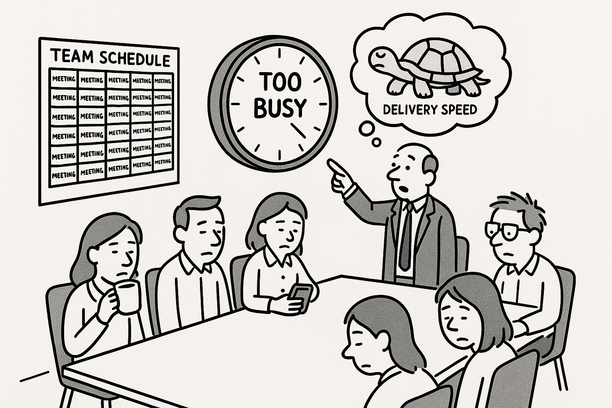
In my last product leadership role, our calendars looked like a high-speed train—back-to-back meetings, inboxes on fire, and endless approvals. Yet customers still felt delays. I learned the hard way that busy teams look fast but deliver slow; when calendars overflow, motion masquerades as progress. The real work wasn’t the hours we logged but the friction we removed: fewer resets, clearer ownership, and faster, safer decisions. This article unpacks where motion waste hides and how to shift from tracking activity to measuring outcomes—so you reclaim leadership time, shorten decision cycles, and ship more value each week.
Unpacking Motion Waste: The Hidden Drains of Meetings, Email, and Approvals
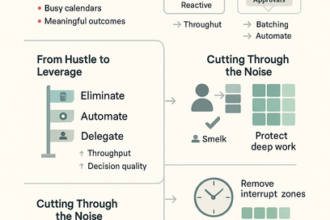
- Context switching: Leaders’ days splinter into pings; each reset burns 20–40% throughput. Protect focus and batch decisions.
- Meetings: Status hours swell (executives average ~23/week). If updates mirror the tool, cancel the meeting; move to async dashboards and reserve live time for decisions.
- Email and CC (carbon copy): Roughly 28% of time disappears in the inbox. Assign single owners and SLAs (Service Level Agreements); turn CCs into read-only updates. If an email chain has more than five recipients or three replies, switch to a doc with one owner and a decision deadline.
- Approvals: Wait time, not work time, stalls flow (often under 20% efficient). Time-box, auto-route, and escalate by exception; use preapproved thresholds to stop aging work.
Motion waste can masquerade as control. If you want a simple, low-friction way to spot and fix these leaks, the Lyaxis weekly insight brief highlights benchmarks and patterns—start with the newsletter for practical plays.
Shifting Focus: From Activity Tracking to Outcome-Based Metrics
- Outcome metrics, not motion: Track time-to-value, adoption, and renewal lift; retire hours and task counts.
- Leading signals: Watch cycle time, flow efficiency, and decision latency. When meeting time exceeds focus time, throughput falls.
- Remove motion waste: Prefer async updates; limit recurring meetings; use one-click, time-bound approvals with audit trails.
- Align incentives: Reward fewer handoffs per win; shrink queues; celebrate impact instead of attendance.
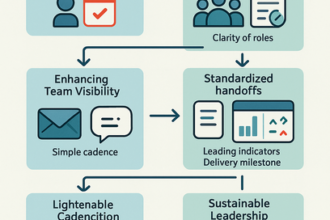
- Trust with visibility: Lightweight demos and weekly outcome reviews beat status theater.
- Leadership focus: Protect recurring 3-hour blocks; dashboards should answer “What shipped?” not “Who’s busy?”
Busy teams can look productive while customers still feel delays. Refocusing dashboards on value clarifies priorities and accelerates delivery.
Pragmatic Strategies to Reclaim Leadership Time and Accelerate Decision Cycles
- Deep-work fences: Block leader focus windows; move status updates async so meetings exist only to decide.
- One-page decisions: A DRI (Directly Responsible Individual), options, guardrails, and a 48-hour SLA (Service Level Agreement) make faster calls feel safe.
- Outcome visibility: Replace activity dashboards with cycle time, flow efficiency, and clear definitions of done.
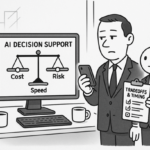
- Risk-tiered approvals: Auto-approve low risk; use pre-checklists and lightweight automation for the rest.
Lyaxis distills these plays into short field notes you can apply next week—no pitch, just patterns. Get the next set of tactics via the newsletter. The result: less motion, shorter cycles, more throughput—no extra headcount.
Beyond Busyness: Building a Trust-Driven, Async-First Culture for Scalable Growth
- Trust-first, async OS (operating system): Keep control without burnout; scale across time zones with written updates and clear owners.
- Outcomes over activity: Ship with clear owners, definitions of done, and SLAs; track cycle time and flow efficiency, not hours.
- Strip motion waste: Replace status meetings and email ping-pong with written updates; reserve live time for decisions and regain 5–10 focus hours per week.
- Faster approvals: Templated briefs auto-route with 24-hour response bands; decisions are logged in the work for fewer stalls and better audits.
Curious what to change first? Lyaxis maps motion waste and shares low-friction plays in a short, practical newsletter. Expect faster decisions, higher throughput, and calmer teams.