Introduction: Transforming Construction Visibility Beyond Trailer Whiteboards
I’ve stood in too many job trailers where the whiteboard aged by noon and the day kept changing. Static boards freeze yesterday’s truth; decisions shouldn’t. When we shifted to live digital visual boards, work became visible across crews and sites, and leaders could spot risk before it hit the schedule. This article breaks down how that shift reduces firefighting, cuts admin, and lifts accountability—without piling on extra work for the field.
From Static to Live: How Digital Visual Boards Revolutionize Multi-Site Project Tracking
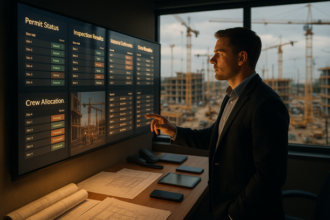
Static trailer boards hide risk. Live digital boards stream permits, inspections, materials, and approvals across sites—drift becomes visible before overruns. A portfolio view delivers always-on status so PMs (Project Managers) can rebalance crews and resequence work before idle time appears. Constraints and approvals surface with owners and AHJs (Authorities Having Jurisdiction); due dates and assignees are public, so cycles shorten. Trade handoffs become explicit—next-trade readiness cuts rework and overtime. Accountability rises without extra admin: the field posts photos and notes once, while office and leadership see health remotely.
Making Work Visible: Real-Time Insights into Permits, Inspections, Materials, and Approvals
- Permits and inspections: lead times and next dates are visible, with alerts before expiry.
- Materials and approvals: ETAs (Estimated Time of Arrival) and decision queues are transparent, enabling resequencing instead of firefighting.
- Ownership and signals: each card shows a name, SLA (Service Level Agreement), and status—raising accountability without extra admin.
- Cross-site view: one source of truth reduces status meetings and email chase.
Standardized visuals move with the project, reducing compliance misses and making it easy to keep every stakeholder aligned.
Reducing Firefighting and Admin Load with Lean Visual Controls Across Field and Office
- Cross-site visibility: permits, inspections, materials, and approvals at a glance—spot slips before they become overruns.
- Cleaner handoffs: standardized lanes show owners, dates, and blockers—approvals and inspections move in hours, not days.
- Less noise: one source of truth replaces status meetings and duplicate entry—auto-updated from the field for real-time oversight.
- Remote oversight by trade: constraints surface quickly; leaders intervene before crews idle.
- Shared commitments: field updates once, office sees instantly—emails and status chases drop.
Result: fewer fire drills, faster calls, steadier margins, and leadership time back.
Closing the Loop: Achieving Cross-Site Accountability and Schedule Risk Early Warning
- Shared metrics with owners: slippage is visible early; teams resequence before idle time.
- Variance signals that travel: one fix on one site prevents five repeats elsewhere.
- Approvals turned into queues: items stuck in inboxes become visible; leaders unblock without meetings.
- Readiness signals: materials and inspection readiness show red/amber/green so PMs (Project Managers) can shift labor and avoid overtime.
- Early flags, fewer surprises: portfolio status and clear due dates provide schedule risk early warning and reinforce accountability without added admin.
Curious what leading GCs (General Contractors) track to trigger these alerts? See practical, low-friction patterns you can apply now in the Lyaxis newsletter—quiet benchmarks, field-tested visuals, and setup tips that calm days and protect margins.
Explore the Lyaxis newsletter for distilled, actionable playbooks that turn boards into flow and protect schedules across every site.