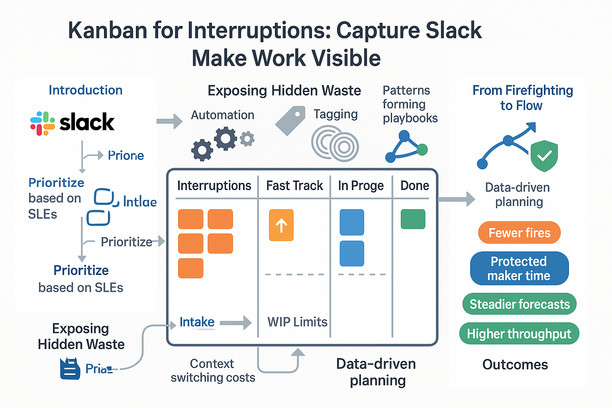
Introduction: Making Invisible Work Visible with Kanban and Slack
I used to end most days certain I’d been busy—yet our roadmap barely moved. Slack would pop, I’d jump, we’d “just help for a minute,” and the thread would vanish into history. The real problem wasn’t effort; it was invisibility. When we paired Slack with a lightweight Kanban system, every ping turned into a card we could see, triage, and finish. Suddenly, the story of our day was visible—and we could steer it.
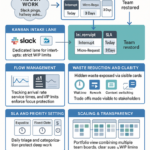
- Interrupts become intake. Auto-capture channel asks and DMs (Direct Messages) into a simple “Interruptions” lane with clear SLEs (Service Level Expectations).
- Waste stops hiding. Measure ad‑hoc volume and the ~23‑minute refocus tax from context switching to negotiate trade‑offs with data.
- Focus returns. Lightweight WIP (Work in Progress) limits and office hours cut context switching; only fast‑track what truly matters.
- Planning steadies. A shared board shows capacity, aging, and realistic forecasts you can trust.
Below are the simple patterns we used to turn Slack noise into managed flow—without adding tool bloat.
Capturing Slack Interruptions: A Lightweight Kanban Lane for Ad‑Hoc Requests
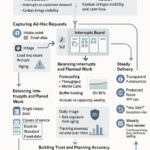
Slack drive-bys torch maker time; a dedicated Kanban “Interruptions” lane turns that noise into a single, managed intake.
- Auto-convert pings to quick cards—one intake, zero chaos. Use a standard emoji, message shortcut, or bot to send any ask to the same lane and avoid scattered side threads.
- Batch triage twice daily; set simple SLEs (Service Level Expectations). For example, 2-hour triage and 24-hour first response resets expectations without being “always on.”
- Fast-track only by policy. Keep an explicit fast-track lane for true emergencies; everything else queues visibly so capacity and trade-offs are clear.
- Track arrival rate, WIP (Work in Progress), and lead time. Leaders plan with data while context switches drop for the team.
Outcome: fewer fires, steadier throughput, happier teams—and promises kept.
Exposing Hidden Waste: Turning Unplanned Work into Data‑Backed Insights
Slack pings look small; the hidden tax is huge. Parking them in a Kanban “Interruptions” lane turns noise into evidence you can act on.
- Auto‑intake Slack to cards; tag source, urgency, and root cause. See arrival rates, response times, and patterns by team, customer, or hour.
- Track cycle time and context‑switch cost. Quantify thrash to justify staffing, standards, or upstream fixes.
- Set service levels for quick asks. Fast‑track a few; defer or decline the rest—with data to back the decision.
- Let patterns guide improvements. Use tags and trends to create playbooks, update policies, and fix recurring sources of noise.
Outcome: fewer fires, protected maker time, and steadier forecasts.
Protecting Maker Time and Improving Planning with Clear Service Expectations
Slack pings feel harmless—until they erode deep work and hide capacity. Clear service expectations turn noise into predictable flow.
- Set humane response windows (SLEs). Think 90‑minute replies for questions and 24‑hour turnaround for small fixes so urgency is earned, not assumed.
- Auto-capture DMs (Direct Messages) to an Interruptions lane. Invisible work becomes measurable and shareable.
- Hold office hours to protect 3–4 hours of deep work daily. Context switching drops; it takes ~23 minutes to refocus after an interruption.
- Define one fast‑track lane and a clear escalation path. Everything else queues, making capacity and priorities visible.
With expectations set and visible, plans stop drifting and commitments stick.
From Firefighting to Flow: Delegating, Automating, and Scaling with Confidence
Slack pings feel urgent; plans drift. When every interruption flows to the right owner automatically, you move from reaction to control.
- Pipe Slack into a Kanban Interruptions lane. Auto‑create cards, tag owners, and triage in one click—many teams discover a third of capacity hiding here.
- Use light SLEs (Service Level Expectations) and reserve fast‑track for the critical few. Defer or decline the rest with clear policy; task switching burns 20–40% of productive time.
- Turn repeats into playbooks; automate handoffs. Work moves without you as standards and simple automations take over.
- Share a live capacity view. Plan with facts, negotiate calmly, and scale without adding chaos.
Impact: higher throughput, fewer fires, and a team that keeps its promises.
Want the exact patterns and tiny automations we use? Get steady, no‑fluff plays via the Lyaxis newsletter. When you’re ready to deepen habits, Impruver University is a practical next step (15% off with code “15off”).