Introduction: Why WIP Limits Are a Game-Changer for Office Teams
I learned the hard way that “working harder” isn’t the same as “finishing faster.” When I first helped a finance and operations team visualize their work, we discovered dozens of half‑started tasks scattered across inboxes and boards. The shift that changed everything wasn’t a new tool—it was setting humane work‑in‑process (WIP) limits. Within two cycles, month‑end stopped being a fire drill, approvals flowed, and people finally had room to think.
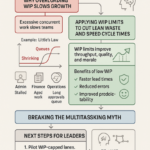
Work‑in‑process (WIP) limits turn busyness into predictable flow. Cap in‑flight work and office teams finish faster, handoffs smooth out, and priorities stop thrashing.
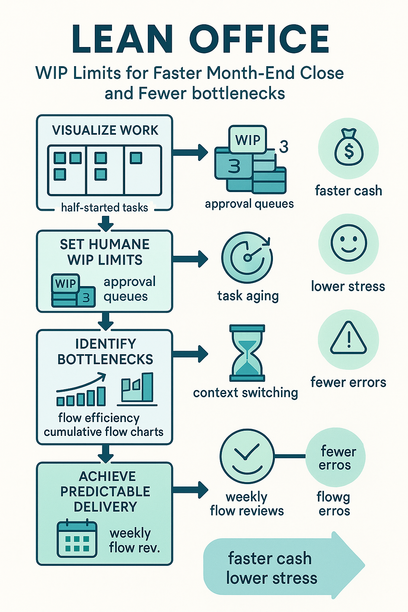
Less WIP, shorter cycles—Little’s Law (average work‑in‑process equals throughput multiplied by average cycle time)—so month‑end closes compress and invoices clear in days, not weeks. Caps expose bottlenecks (often approvals), enabling precise fixes instead of more meetings. Task aging becomes visible, stalled work moves first, service level agreements (SLAs) stabilize, and cash arrives earlier. With fewer switches, errors drop and people breathe.
Curious where to start? The Lyaxis newsletter distills low‑friction experiments you can try next week; Impruver University adds practical depth. Takeaway: calmer days, faster cash, higher trust.
Unseen Bottlenecks: How Overcommitment and Stalled Tasks Drain Your Back Office
Overcommitment hides in plain sight; unseen queues and stalled handoffs quietly drain throughput and morale. In admin, finance, and operations (ops), most lead time is waiting, not working.
Email‑parked approvals delay revenue and keep month‑end in crisis.
Context switching across many tickets can double lead time and errors.
Aging tasks bury SLAs while new work jumps the line.
Humane WIP limits per role surface bottlenecks, shrink cycles, and lower stress.
Simple flow metrics turn chaos into predictable throughput.
Curious where your hidden WIP lives? The Lyaxis newsletter walks a gentle diagnostic and board tweaks; Impruver University offers drills. Outcome: faster cash and predictable delivery without headcount.
Applying Lean Office WIP Limits to Cut Cycle Times and Improve Flow Efficiency
Invisible queues—not effort—slow your back office. Stage‑specific WIP limits turn scattered work into predictable, faster flow.
- Size limits to real capacity: align to focus hours per stage; a finance team cut close time by tightening approval WIP.
- Make queues and aging visible so stuck items surface before SLAs slip.
- Measure cycle time and flow efficiency to target the longest waits.
- Cap in‑progress per person to reduce context switching and lift throughput without hires.
Curious where your bottleneck hides? Lyaxis shares quick‑reference WIP patterns in the newsletter; Impruver University adds practical drills. Expect faster cycle times, steadier cash, calmer teams.
Beyond Firefighting: Data-Driven Insights to Visualize Work and Reduce Context Switching
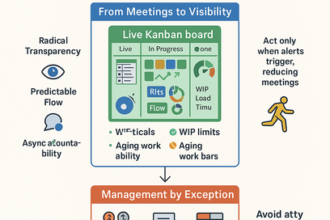
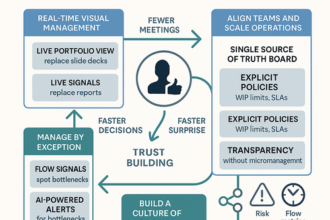
Firefighting fades when work is visible. Simple cues—WIP limits, aging charts, and cumulative flow—turn noise into predictable throughput. WIP limits in admin and finance cut lead times; fewer items in progress finish faster. Aging charts surface stalled approvals before month‑end crunch, protecting cash and revenue recognition. Cumulative flow reveals queues and capacity gaps, reducing context switching and handoff delays. Visual boards replace status hunting; leaders spot blockers in minutes, not meetings.
For patterns to copy, Lyaxis’ bite‑size newsletter distills them; when deeper practice helps, Impruver University is a next step. Outcome: faster close, steadier cash, calmer teams—without more headcount.
Building Scalable, Predictable Delivery with Humane WIP Limits and Continuous Improvement
Predictable delivery isn’t heroics; it’s humane limits and steady cadence. What if month‑end closed faster without nights or weekends?
Set WIP limits by role to stop invisible queues; Little’s Law turns lower WIP into shorter lead times. Visualize task aging and blocked items; stalled approvals surface early, not at quarter end. Protect focus windows; fewer parallel tickets cut context switching and rework across finance and ops. Run weekly flow reviews; adjust limits and forecast from throughput so dates stick without overtime.
Explore the Lyaxis newsletter for field‑tested patterns; deepen practice with Impruver University. Calmer teams, faster cycles, cash sooner.