Lyaxis Newsletter: Insights in Kanban and Business Process Management
This issue highlights essential practices to visualize and improve knowledge work and business process flows. From pinpointing bottlenecks with Kanban to automating workflows intelligently, these articles provide clear paths toward operational efficiency without added overhead.
Pinpoint Kanban Bottlenecks with CFDs and Blocked Columns

Kanban provides essential visibility into work queues that often cause delays and missed commitments. Using cumulative flow diagrams (CFDs) helps teams identify real constraints before adding resources. Incorporating a “Blocked” column makes invisible delays visible and actionable.
Operationalizing these Kanban insights in Monday.com, with status fields, WIP limits, and automation, enables sustainable flow improvements that build leadership confidence and reduce firefighting without increasing headcount.
Read more → https://lyaxis.com/pinpoint-kanban-bottlenecks-with-cfds-and-blocked-columns/
Kanban for Knowledge Teams: Standard Work Without Red Tape
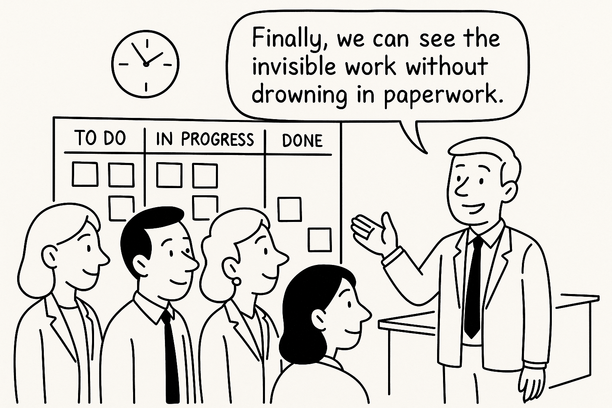
Kanban transforms office work by making invisible tasks visible, establishing light policies, and measuring flow for predictability and faster onboarding. It brings autonomy to teams and reduces unnecessary firefighting.
By setting explicit WIP limits, visualizing flow, and using cadence-based reviews rather than status meetings, teams gain clarity and reduce rework with simple, repeatable approaches that scale without bureaucracy.
Read more → https://lyaxis.com/kanban-for-knowledge-teams-standard-work-without-red-tape/
Pull vs Push: Start Less, Finish More with WIP Limits

Shifting from push (starting work on promises) to pull (starting work based on capacity) leads to steadier delivery and reduced firefighting. Limiting work in progress (WIP) uncovers bottlenecks and reduces rework, enabling teams to finish more efficiently.
Clear pull signals, defined ready/done criteria, and service expectations empower autonomous teams, improving predictability and reducing stress for all stakeholders.
Read more → https://lyaxis.com/pull-vs-push-start-less-finish-more-with-wip-limits/
Kanban for Interruptions: Visualize Unplanned Slack Work

Slack interruptions cause invisible context switching costs that erode focus and extend lead times. Using a Kanban intake board for ad-hoc requests surfaces hidden demand and helps teams negotiate priorities and protect deep work.
Setting clear policies for urgency, capping WIP for triage, and tracking data enable firms to reduce firefighting and rebuild trust with more predictable flow.
Read more → https://lyaxis.com/kanban-for-interruptions-visualize-unplanned-slack-work/
Kanban Metrics Turn Office KPIs into Leading Indicators

Traditional KPIs often lag, showing what happened too late. Kanban metrics like cycle time, throughput, and aging work in progress provide early warnings and credible forecasts. These signals focus decision-making on flow improvements rather than chasing tasks.
Implementing daily and weekly review cadences paired with clear service-level expectations enables teams to reduce variability and improve predictability at scale.
Read more → https://lyaxis.com/kanban-metrics-turn-office-kpis-into-leading-indicators/
Kanban + Kaizen: Scale Lean Without Consultants
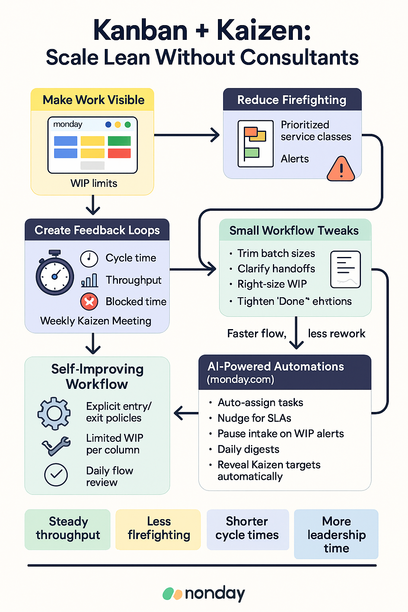
Scaling Lean effectively does not require consultants or big transformations. Combining Kanban with Kaizen fosters continuous, compounding improvements through small, visible workflow tweaks. This approach leads to shorter cycle times and steadier delivery.
By using clear entry/exit policies, work-in-progress limits, and regular flow reviews in Monday.com, teams can sustain improvements and free leadership time without excess bureaucracy.
Read more → https://lyaxis.com/kanban-kaizen-scale-lean-without-consultants/
From Busy to Flow: Kanban for Knowledge Work on Monday.com
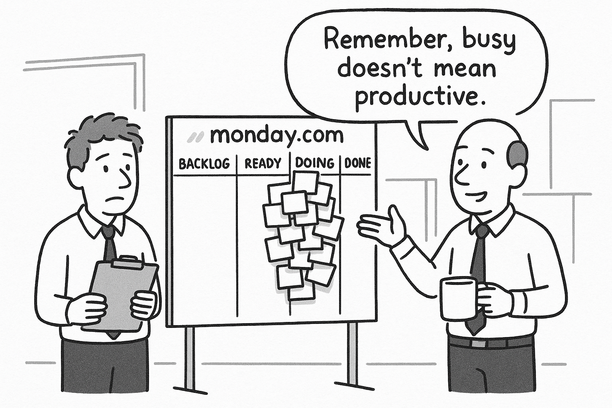
Busy office work often masks broken flow, causing missed deliverables despite constant activity. Kanban exposes hidden queues, unnecessary task switching, and slow feedback loops, enabling calmer, predictable throughput.
Implementing clear policies, swimlanes, and WIP limits in Monday.com helps teams visualize real flow, cut context switching, and scale improvements confidently.
Read more → https://lyaxis.com/from-busy-to-flow-kanban-for-knowledge-work-on-monday-com/
Which Process to Automate First? Map the Value Stream
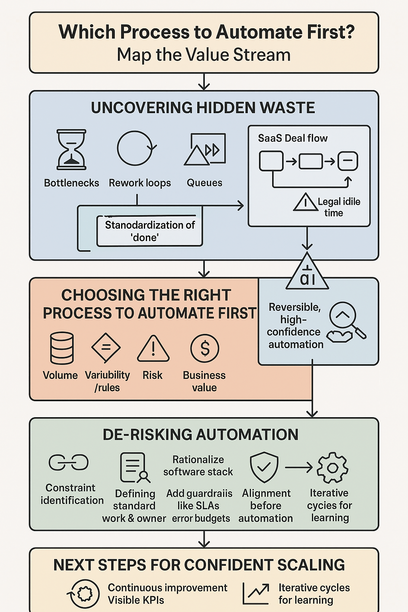
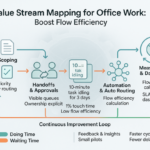
Automation multiplies existing flows—if processes are broken, automation scales inefficiency. Mapping your current state reveals bottlenecks, rework, and silent queues, helping choose automation targets that actually drive value.
Prioritizing processes by impact and feasibility, aligning teams, and standardizing work before automating yield faster ROI and avoid costly rework.
Read more → https://lyaxis.com/which-process-to-automate-first-map-the-value-stream/
One-Page SIPOC Template for Fast Executive Alignment

Discussions on process scope and ownership often drag out. A simple one-page SIPOC (Suppliers, Inputs, Process, Outputs, Customers) quickly aligns leadership on scope, key handoffs, and ownership to reduce rework and accelerate decision-making.
By treating SIPOC as a living board in Monday.com, teams keep the map current, connected to tasks and automations, improving clarity and faster onboarding across teams.
Read more → https://lyaxis.com/one-page-sipoc-template-for-fast-executive-alignment/
Swimlane Diagram: Clarify Handoffs, Cut Cycle Time
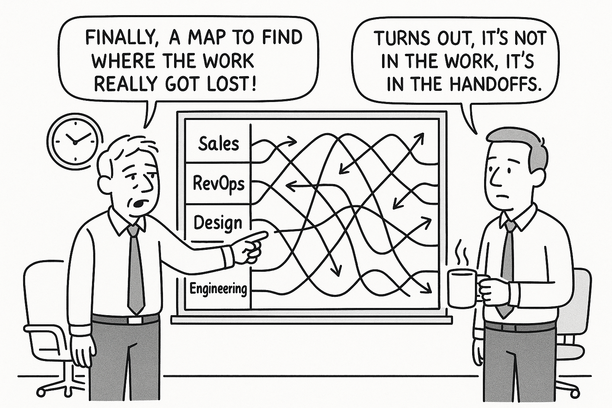
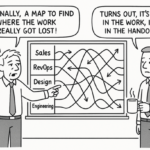
Most delays occur between teams rather than within them. Swimlane diagrams reveal handoff boundaries, clear ownership, and bottlenecks that cause cycle time to slip. Explicit handoff SLAs reduce escalations and improve flow.
By focusing on these boundaries with clear metrics and owner accountability, teams cut unnecessary delays and free leadership to focus on strategic priorities rather than firefighting.
Read more → https://lyaxis.com/swimlane-diagram-clarify-handoffs-cut-cycle-time/