Why High-Growth Leaders Are Dropping Status Meetings
Introduction: Why High-Growth Leaders Are Dropping Status Meetings
I’ve led teams through the phase where calendars groan under recurring status calls. The turning point came when we swapped “tell me where things stand” meetings for live visibility. Decisions sped up, stress dropped, and managers consistently reclaimed 5–10 hours a week—without adding headcount.
High-growth teams are replacing status meetings with live visibility so leaders decide faster and meet less. Automation gives managers back 5–10 hours a week.
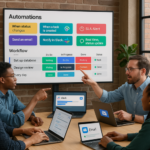
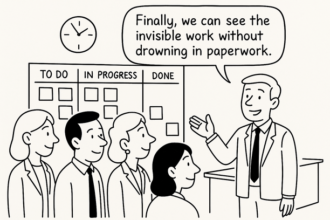
- Weekly roll‑calls: became a Monday board with owner, status, ETA (estimated time of arrival); a dashboard surfaces blockers; alerts fire only on risk.
- Signal over noise: service-level agreement (SLA) breaches auto-flag; burndown and capacity update hourly.
- One source of truth: integrations pull Jira and customer relationship management (CRM) data, eliminating spreadsheet rollups.
Fewer meetings, faster decisions, a calmer org that scales without new headcount.
From Meeting Overload to Real-Time Visibility: Automating Updates and Alerts
Status meetings create lag. Automate updates and alerts so changes surface instantly—and managers reclaim 5–10 hours weekly.
- Automatic owner alerts: Monday boards auto-alert owners on status or scope shifts; executives see one risk digest.
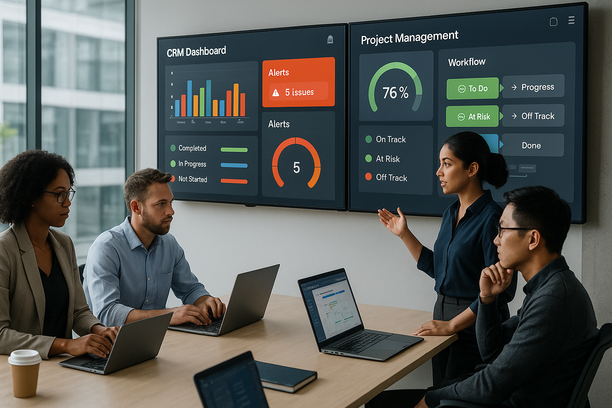
- Live cross-functional dashboards: dashboards stream CRM (customer relationship management), delivery, and finance data; SLA (service-level agreement) or budget drift flags red with timestamps.
- Auto-rollups and audit trails: auto-rollups replace spreadsheets; weekly summaries explain changes (deltas) and decisions, creating audit trails.
- Fast, low-friction pilot: pilot in two weeks with one team; adoption sticks because work stays in existing tools.
Showcasing Success: How Teams Use Monday Dashboards and Automation
High-growth teams are replacing status meetings with Monday dashboards and automation that make performance obvious. Result: 5–10 hours back per manager and fewer surprises.
- Marketing: a launch board rolls to an executive dashboard; risk tags trigger Slack alerts; three daily stand-ups cut, about 6 hours per week saved.
- Sales operations: a CRM-synced pipeline with SLA nudges and a forecast widget; predictability up 12%, reviews go asynchronous.
- Product and engineering: a sprint dashboard surfaces cycle time and blockers; red-lane automations escalate; cycle time down 18%.
Net: real-time truth, lighter calendars, faster execution.
Scaling Operations Without Adding Headcount: Practical Outcomes and Insights
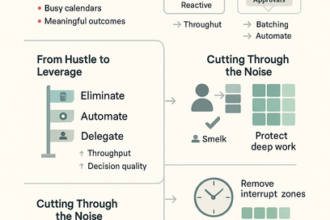
Scale output without headcount by standardizing workflows, automating handoffs, and surfacing risks early. High‑growth teams replace status meetings with dashboards and alerts, freeing 5–10 hours per manager.
- Standardize: one Monday board per workflow with required fields and SLA (service-level agreement) timers—updates stay consistent.
- Automate handoffs: status triggers auto-assign work; risk-only alerts to Slack or Microsoft Teams—cycle time drops.
- Surface risk: work-in-progress (WIP) aging, blockers, and capacity heatmaps roll to an executive dashboard—issues surface earlier.
- Tradeoff that pays: stricter data hygiene; measurable gains—fewer meetings, faster updates, higher on-time delivery.
Outcome: more leverage, same headcount.
Gaining Clarity and Relief: Ongoing Insights to Reclaim Manager Time
Clarity that saves time comes from a steady stream of insights—without meetings. Shift to trends, exceptions, and forecasts that surface exactly when needed.
- Weekly trend brief: auto-rollup from Monday boards to one page. Velocity, aging work, and capacity—no decks.
- Exception-only alerts: Slack or email for SLA (service-level agreement) risks and blocked owners. Silence otherwise.
- Rolling forecast: a live dashboard projects delivery and capacity. Fewer “are we on track?” calls.
- Adoption win: teams update once; leaders see the views they need. Trust rises.
Result: 5–10 hours back per manager, fewer surprises, cleaner decisions.
Want the playbook and the ROI (return on investment) math? Get our short weekly briefing with setups and snapshots, plus optional Monday templates you can copy.