Introduction: Unlocking Rapid Process Clarity with SIPOC and Kaizen Sprints
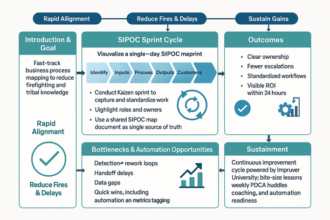
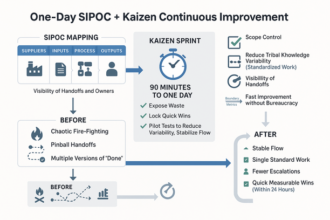
I’ve lost count of how many times a “simple” process question spiraled into a week of meetings, side chats, and guesswork—until we ran a one-day SIPOC and Kaizen sprint. In a single, focused session, leaders and frontline teams walked out with a shared map, crisp owners, and standard work we could use the same day. SIPOC (Suppliers, Inputs, Process, Outputs, Customers) framed the conversation; Kaizen (continuous improvement) turned clarity into action. The result was fewer fires, faster onboarding, and a calmer operating cadence—hours, not weeks.
SIPOC with a Kaizen-style sprint gives executives rapid, shared process clarity—hours, not weeks. It keeps the scope tight, language consistent, and actions practical so you can publish standard work the same day and set the stage for automation without heavy frameworks or disruption.
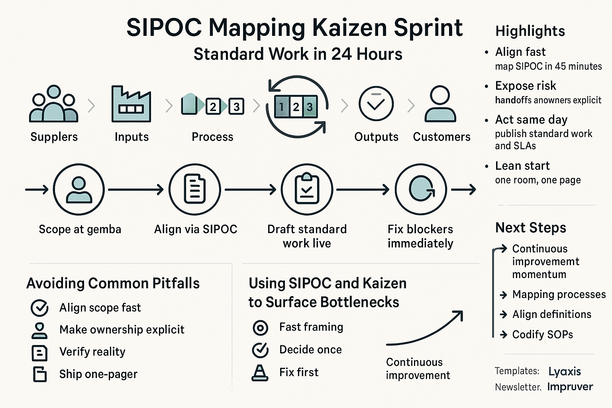
- Align fast: define Suppliers, Inputs, Process, Outputs, Customers in 45 minutes; freeze scope.
- Expose risk: make handoffs, owners, and data definitions explicit; retire tribal knowledge.
- Act same day: publish standard work, queues, and SLAs (Service Level Agreements); ready the ground for automation.
- Lean start: one room, one page, measurable wins tomorrow—no heavy frameworks.
Lyaxis operationalizes this cadence and shares the “why” in a no-fluff operator newsletter—subscribe via the Lyaxis newsletter. For scaffolding, Impruver University’s practical guide and templates make the sprint turnkey; see Impruver University.
How to Map and Standardize Critical Processes in One Day Without Disruption
A one-day SIPOC + Kaizen sprint can standardize your top one to three critical flows without pausing production. You’ll tighten scope at the gemba (the actual workplace), focus on revenue or quality chokepoints, and walk out with frontline-signed standard work.
- Scope at the gemba: pick 1–3 flows across shifts; prioritize revenue or quality chokepoints.
- Align via SIPOC: lock suppliers, inputs/outputs, customers, owners, and defect definitions; normalize data and expectations.
- Draft standard work live: add visual checks; have frontline teams sign off for day-one stability and faster onboarding.
- Fix what you can now: resolve <2‑hour blockers immediately; park bigger items with named owners and due dates.
Impruver University’s practical guide and templates help this run smoothly from the first hour—see Impruver University. Lyaxis templates and cadence make the day feel light but rigorous; our newsletter shares the telltale signals to watch.
Avoiding Common Pitfalls: From Tribal Knowledge to Standard Work in 24 Hours
Tribal knowledge and fuzzy ownership stall scale. In 24 hours, a SIPOC‑fueled Kaizen turns know‑how into crisp standard work that reduces rework and elevates predictability.
- Align scope fast: map SIPOC to surface risky handoffs and close ambiguity gaps.
- Make ownership explicit: assign clear owners and SLAs (Service Level Agreements); use RACI‑lite (Responsible, Accountable, Consulted, Informed) per step plus a 10‑minute daily check.
- Verify reality: run a 30‑minute gemba (the actual workplace) walk; capture cycle time and defects.
- Ship a one‑pager: include entry/exit criteria and defect definitions; SOP‑ready (Standard Operating Procedures) and automation‑ready.
Curious how this looks in your context? Lyaxis can show how your top 1–3 processes fit—start with the newsletter for the playbook.
Using SIPOC and Kaizen to Surface Bottlenecks and Align Teams Fast
SIPOC frames scope and handoffs; rapid Kaizen turns clarity into fixes in hours. Expect alignment, bottlenecks exposed, and momentum—without meeting sprawl.
- Frame fast: build a SIPOC in 30–45 minutes to surface risky handoffs.
- Decide once: agree on CTQs (Critical to Quality requirements) and owners; kill scope creep and data ambiguity.
- Fix first: visualize queues, rework, and delay cost; lock standard work and a 30‑day check.
Lyaxis can quietly run the one‑day sprint and leave you automation‑ready; begin with the newsletter to see the playbook in action.
Next Steps: Building Continuous Improvement Momentum with Impruver’s Practical Guide
One focused day can reset your operating cadence. A SIPOC‑led Kaizen sprint locks shared language, reveals risk, and installs standard work—without disruption. From there, you extend wins through lightweight routines and targeted fixes.
- Map the top 1–3 processes: expose bottlenecks, unclear owners, and risky handoffs.
- Align definitions: standardize inputs/outputs and defect criteria to stop rework and ready clean data for automation.
- Codify what works: turn tribal knowledge into lightweight SOPs (Standard Operating Procedures) that speed onboarding, cut firefighting, and free leadership time.
For a proven path with templates and checklists, explore Impruver University. And if you prefer to see the signals first, the Lyaxis newsletter shares the operator‑level playbook. Net: steadier delivery, fewer escalations, and time back for leadership.