I learned the hard way that most delivery misses don’t come from bad estimates—they come from uneven ways of working. The moment we standardized how teams planned, handed off, and closed work, our “maybe Friday” became “shipped Wednesday.” What changed wasn’t headcount or heroics; it was clear norms, reusable templates, and light automation that made the right way the easy way.
Why Standardizing Work Across Teams Unlocks Predictable Delivery
Standardizing how work flows—not adding bureaucracy—turns estimates into delivery you can trust. Shared norms reduce variance so cross‑team handoffs stop leaking time and context. When everyone uses the same intake, naming conventions, and milestones, leaders stop chasing status and teams stay focused on outcomes.
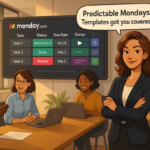
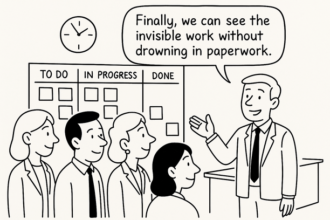
In practice, this looks like a single intake board that consolidates demand, auto‑routes work, and eliminates duplicates. Definitions of Done (DoD) embedded in Monday.com templates bake acceptance criteria, Quality Assurance (QA), and owners into each item—turning “done‑ish” into done. Work‑in‑Progress (WIP) limits on dashboards surface overload early, stabilizing cycle times and making forecasts stick.
Crafting Reusable Workflow Templates to Drive Operational Consistency
Reusable workflow templates turn tribal know‑how into repeatable outcomes. They set a clear bar without drag and remove ambiguity about who does what, when, and to what standard.
In Monday.com, modular steps and checklists across boards and Workdocs cut misses; automations route approvals and enforce Service Level Agreements (SLAs). Versioned templates and changelogs keep quality tight while custom fields allow safe local tweaks. Standardized intake and naming create a single source of truth, so dashboards become trusted signals, not noise. New hires launch the template, see owners, and watch handoffs flow automatically.
How Monday.com Templates and Automations Streamline Cross-Functional Handoffs
Handoffs break when ownership is fuzzy and context lags. Monday.com templates and automations turn transitions into rules, not reminders—and rules scale.
- Templatize boards with owners, Service Level Agreements (SLAs), and linked Workdocs. New hires follow the same path, with expectations and context in one place.
- Trigger moves on status changes. When design is marked done, automatically create development tasks, assign owners, set due dates, and route items to the right board.
- Standardize intake with forms and naming conventions. Linked boards surface dependencies and auto‑route approvals across legal and QA with reminders so nothing stalls.
- Use dashboards to spotlight risk and cycle times. Audit trails replace pings and back‑scrolling through chats.
Reducing Onboarding Time and Leadership Overhead with Templatized SOPs
Templatized Standard Operating Procedures (SOPs) turn onboarding from a scavenger hunt into clear execution. Rookies ship sooner; leaders coach less.
- Link Workdocs to board templates. Items spawn with owners, SLAs, and dependencies so every task starts with clarity.
- Embed checklists, Loom links, and approvals. Questions route to the right reviewer—not the CEO—so decisions keep moving.
- Standardize naming and intake. Duplicates vanish, and a single source of truth emerges across teams.
- Govern with versioned templates. Exceptions captured in updates feed the next revision, improving the SOP without adding friction.
Scaling with Confidence: Maintaining Quality and Visibility in Complex Operations
As you scale, quality and visibility come from guardrails, not heroics. Standard work, audit‑ready trails, and live dashboards let teams ship confidently—and explain why.
Templatized Monday.com boards turn intake into owned work with SLAs, naming conventions, and automated handoffs. Versioned SOPs in Workdocs link to execution and capture exceptions, keeping templates real. Approvals run on timers with conditional routing, leaving an audit trail. Portfolio dashboards roll up a single source of truth, freeing leaders from status‑chasing. Onboarding becomes a prebuilt project you can launch in minutes.
Curious how this maps to your org? Lyaxis shares field notes and governance patterns you can apply today—insight first. And if you want to see these ideas in action, explore the templates and automations in Monday.com here: try Monday.com.