Introduction: Unlocking Daily Improvement Through Visual Management Walls
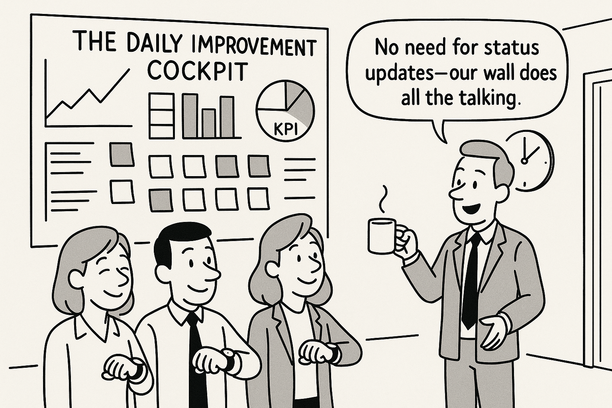
I’ve watched teams transform the very week they made work unmissable. The day a simple wall went up—targets, gaps, owners—conversations shifted from status-chasing to problem-solving. Meetings got shorter, experiments got faster, and leaders stopped playing traffic cop. That first wall became our cockpit for daily improvement, and momentum finally stuck.
Daily improvement sticks when work is visible; visual management walls turn scattered updates into a shared, at‑a‑glance cockpit prompting action. Physical or digital, it becomes the source of truth and shrinks meetings to decisions. Make progress visible and performance compounds, day by day.
- One wall, few metrics. North star, today’s target, gaps—so teams self-correct without you.
- Real time beats weekly dashboards. Issues surface by 9am and experiments start by 9:15.
- Visibility builds trust. Ownership rises, firefighting falls; leaders regain hours as habits take over.
Curious where to start? You can grab ready-to-use Impruver University templates and dip into the evolving patterns in our newsletter.
Making Work and Bottlenecks Visible: The Power of Information Radiators
Information radiators turn invisible work into shared facts. When WIP (Work in Progress), queues, and blockers are visible, meetings shrink and decisions speed up.
- Make invisible work visible. Map work by stage with owners and aging; queues expose capacity gaps early.
- One panel, clear behavior cues. Show today’s target vs actual and the next experiment; it drives behavior, not reporting.
- Huddle at the wall. A 10‑minute wall huddle converts status into decisions and learning.
- Update at the source. Keep it light; whether physical or digital, the information radiator reflects reality as work happens.
Curious where to start? Our newsletter offers ongoing patterns, and Impruver University templates provide a ready on‑ramp. Result: faster flow, fewer fires, more leadership time.
Designing a Lean Daily Management System That Drives Behavior Change
Lean daily management turns walls into working brains. When gaps are visible, teams adjust daily and leaders stop firefighting.
- One visual home. Use an information radiator with 3–5 behavior‑driving KPIs (Key Performance Indicators), targets, owners, and aging queues—physical or digital for hybrid alignment.
- Ten‑minute huddles. Decide fast, close yesterday’s gap, run one experiment, review in 24 hours.
- Tight triggers. Set thresholds that prompt action; escalate when stuck, freeing leadership time.
- Maintenance by doing. The board updates in the huddle, reflecting reality as the team works.
Want it frictionless? Preview patterns in our weekly field notes and plug in Impruver University templates. Net: faster decisions, fewer fires.
From Firefighting to Focus: How Visual Walls Free Leadership Time
Visual walls turn status-chasing into strategy by making work and gaps unmissable. With trends in plain sight, leaders trade firefighting for leverage.
- One wall per team. Show today’s target, owner, and blockers—no dashboard hunting.
- See problems early. Red/green trends surface risks; teams test fixes before escalation.
- Decide, don’t report. A 10‑minute huddle moves from updates to decisions; learning is captured.
- Build trust through visibility. Digital or physical, upkeep lives in the workflow; the wall stays lightweight and current.
Start light: Impruver University templates plug right in, and our newsletter shares the “why.” Net: fewer emergencies, tighter focus, reclaimed leadership hours.
Getting Started with Impruver University Templates: Your Practical Path Forward
Visibility is your cheapest lever. Impruver University templates spin up a visual wall in an afternoon—gaps surface, teams act, leadership time returns.
- Start with one board. Choose three behavior‑shaping KPIs (Key Performance Indicators); tiles, 10‑minute huddles, and named owners turn data into decisions.
- Show flow, not just numbers. Include queues, WIP (Work in Progress), and blockers; simple run charts reveal trends and prompt tiny experiments that outlast the launch buzz.
- Meet teams where they work. The same layouts live on whiteboards, TVs, or Miro/Teams, keeping updates light and trustworthy.
For vendor‑neutral patterns to test next, skim the Lyaxis newsletter. Start simple, learn, and watch meetings shrink while throughput climbs.