Unlocking Inventory Savings with EOQ and Safety Stock
Introduction: Unlocking Inventory Savings with EOQ and Safety Stock
I learned the hard way that “more stock” isn’t the same as “more service.” The turning point came when we paired simple math with disciplined process: Economic Order Quantity (EOQ) to size orders and safety stock to absorb variability. Once we stopped guessing and started using live inputs, we saw fewer emergencies, faster turns, and steadier cash—without increasing stockouts.
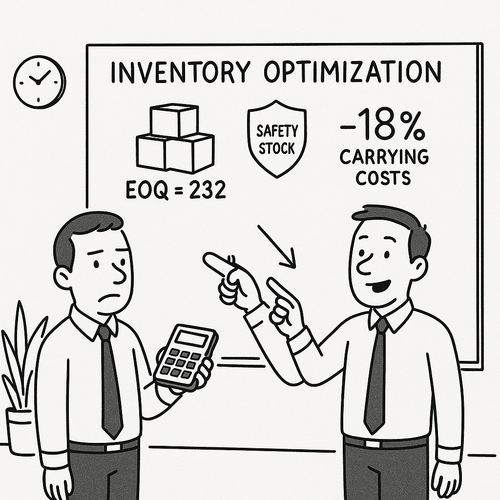
- Turn guesswork into cash discipline: EOQ + safety stock can cut carrying cost about 18% without increasing stockouts.
- Size orders economically (EOQ, Economic Order Quantity): Example: with 3,600 units/year, $60 order cost per PO (Purchase Order), and $8 holding cost per unit-year, EOQ ≈ 232 units.
- Protect service with safety stock: A buffer against demand and lead-time variability, tuned to your target service level (the probability of not stocking out during lead time).
- Set a precise ROP (Reorder Point): ROP = lead-time demand + safety stock; per-SKU (Stock Keeping Unit) beats one-size “min/max” rules.
- Make it visible and automatic: In Monday.com, visualize inputs and automate alerts and approvals so decisions happen on time.
- Get a head start: Lyaxis offers a ready Monday.com board and a no‑fluff newsletter that unpacks the math—pilot a few SKUs, prove ROI, then scale.
Result: fewer emergencies, faster turns (inventory turnover), and steadier cash.
Right-Sizing Reorder Points to Cut Carrying Costs by 18%
Swap generic buffers for data-driven ones that reflect your demand and supplier realities.
- Right-size reorder points: Cut carrying costs ~18% while protecting fill rates by pairing EOQ with safety stock tuned to demand variability and lead-time spread.
- Replace one-size “min/max” with service-based buffers: Tie safety stock to target service levels using demand bands and lead-time volatility.
- Spot trapped cash fast: Look for 90+ days on hand next to chronic expedites—cash is trapped even as you rush orders elsewhere.
- Pilot before policy: Start with the top 20 SKUs and simulate the last 13 weeks to quantify cash freed and service risk.
- Operationalize in Monday.com: Visualize EOQ, safety stock, and lead-time scatter; trigger alerts and approvals where it matters.
- Blueprint included: Quiet relief is real—Lyaxis shares the playbook and board; get insights first in the newsletter, then deploy tools when you’re ready.
Visualizing Demand and Inventory Metrics in Monday.com
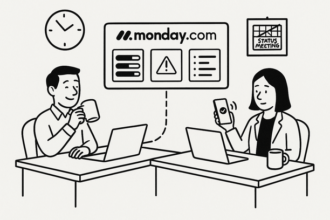
Make Monday.com a live inventory cockpit. See demand, lead time, EOQ, safety stock, and stockout risk at a glance to reduce carrying cost around 18% and align finance with ops.
- Board structure: Columns for SKU, on-hand, 30/60/90-day demand, lead-time average and standard deviation (σ, the spread in days), ROP (lead-time demand + safety stock), EOQ (order size), and turns (inventory turnover). Flag red when on-hand + inbound < ROP.
- Executive dashboard: Forecast vs actual, supplier risk heatmap, cash tied up, and a service-level dial to show trade-offs.
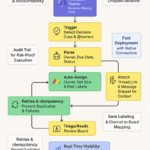
- Automation that acts: When days-of-cover (inventory days on hand) drop below lead time, trigger an approval with an EOQ-based suggestion, then auto-create a PO (Purchase Order) within policy.
- Proof point: A 400‑SKU brand cut carrying cost 17% in 60 days.
If you’re standing this up, Monday.com makes it fast—start here: Monday.com.
Curious? Lyaxis shares the board and a 2‑page explainer via our newsletter. Takeaway: faster alignment, better turns, stronger cash.
Automating Reorder Alerts to Free Leadership Time
Data‑driven reorder alerts—set by EOQ and safety stock—end fire drills and give leadership time back.
- Right-size by SKU: EOQ balances order vs. holding cost; safety stock reflects target service levels and lead-time variability.
- Pre‑risk alerts: Trigger when days‑to‑stockout < lead time + buffer; visualize demand and variability in Monday.com to act early.
- Calm, auditable escalations: Vendor slips or demand spikes raise severity; auto‑reorder within policy and route true exceptions.
- Pilot then scale: Start with high‑cash SKUs; clear, auditable rules align finance and operations.
- Ready to use: Explore a ready Monday.com board and templates—Lyaxis shares the model in a short newsletter.
Result: fewer stockouts, faster turns, and leadership time back for growth work.
Piloting Inventory Optimization: From Insight to Scalable Impact
Prove the ROI in weeks, then scale with confidence.
- Run a low‑risk pilot: Right‑size reorder points with EOQ + safety stock to cut carrying cost ~18% while protecting service.
- Target what matters: Focus on SKUs where cash is trapped or stockouts sting; define clear win thresholds upfront.
- Model the math: Set EOQ, service levels, and safety stock; visualize demand and lead‑time bands in Monday.com.
- Automate and tune: Turn on reorder alerts and approvals; adjust weekly until noise drops and turns rise.
- Drive adoption: Use change‑friendly checklists and a “cash‑unlocked” story to align finance and operations.
- Get the playbook: Lyaxis’ newsletter shares de‑risked steps and a copy‑ready Monday.com board—insights you can use today, not another tool.
- Scale what works: Prove it small, then expand with cleaner cash flow and steadier service.