What I Learned When We Moved Quality From Paper to Real Time
I’ve sat in too many Monday morning reviews wondering why margins slipped when “nothing major” changed. On the floor, I watched scrap and rework hide in overtime, missed ship dates, expedited freight, and warranty creep. The turning point came when we replaced optional paper checklists with enforced, digital step gates and evidence. Within weeks, the noise dropped, defects fell, and leaders finally got their time back. This article shares what worked, why it worked, and how to pilot it with low risk.
Why Scrap and Rework Quietly Drain Your Margins and How Digital Checklists Help
Scrap and rework don’t show up as one line item—they leak through overtime, missed ship dates, and warranty creep. That loss compounds as you scale.
- Gate the work: Digital forms and automations require torque photos and signatures before the job advances, cutting defects by about 35%.
- Prove completion: Time‑stamped evidence creates audit‑ready traceability and reduces warranty debates.
- Clean handoffs: Checklists trigger next‑step owners, shrinking misbuilds and delays.
- See problems now: Dashboards surface out‑of‑spec trends by line and shift, so fixes happen today.
- Quick win: Pilot your top three failure modes—no system swap required.
Want a calm, two‑week pilot map? Our Lyaxis Field Notes share the playbook in simple steps. Explore it here: Lyaxis Newsletter.
Enforced Step Gates and Evidence Trails: The Key to Reducing Defects by ~35%
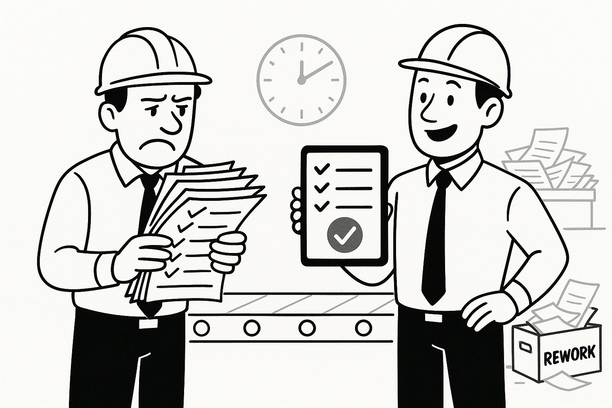
Defects drop when work can’t advance without proof it was done right. Enforced step gates with photos, signatures, and timestamps often cut scrap and rework by about 35% and ease audits.
In a digital checklist, the next step is blocked until required evidence passes spec. Operators see just today’s job; supervisors act on live exceptions. Evidence trails standardize across shifts and speed onboarding. Dashboards surface trends and bottlenecks, lowering cost of quality (COQ), and reducing warranty risk. Automations connect to Enterprise Resource Planning (ERP) and Manufacturing Execution System (MES) tools for end‑to‑end visibility.
Curious what this looks like on your line? Lyaxis maps the gates; our newsletter unpacks the patterns. Fewer defects, calmer audits, more scaling time: Lyaxis Newsletter.
How monday.com Forms and Automations Fit Naturally into Quality Workflows
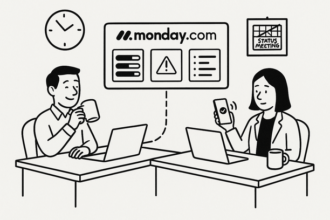
Quality slips when checklists are optional and data arrives after the defect. monday.com forms and automations make gates, evidence, and approvals happen in the moment.
- Enforced gates: Operators can’t advance until required checks are logged with photos, signatures, and specs.
- Instant routing: Nonconformances auto‑create tasks, route approvals, and timestamp decisions, cutting rework and firefighting.
- Real‑time signals: Out‑of‑spec entries trigger alerts and dashboards, exposing bottlenecks and trends across shifts.
- Traceability by default: Copyable blocks build each lot’s audit trail, with no‑code connectors to Enterprise Resource Planning (ERP) and Manufacturing Execution System (MES) systems.
Curious about your ~35% defect drop? Lyaxis shares the specific building blocks: Lyaxis Newsletter.
From Paper to Real‑Time: Achieving Traceability and Audit Readiness Without Heavy IT
Paper hides margin leaks; real‑time, no‑code checklists make traceability and proof the default. With digital forms and automations, processes map fast, parts and people link, and issues surface in minutes.
- Step gates that stick: The “next” button stays blocked until the torque photo and signature pass; timestamps end disputes.
- End‑to‑end linkage: Lot and serial scans tie unit, fixture, and operator; dashboards flag trends mid‑shift, not at month‑end.
- Fast, measurable impact: Teams report roughly 35% fewer defects and lower cost of poor quality (COPQ) within weeks; onboarding variance shrinks.
- Light integrations: Status syncs to Enterprise Resource Planning (ERP) and Manufacturing Execution System (MES); audits become a query, not a scramble.
Want templates, benchmarks, and ROI math? We share the patterns here: Lyaxis Newsletter.
Regain Control and Scale: Free Leadership Time by Cutting Quality Costs and Firefighting
Firefighting hides in quality costs. Standard work, visible queues, and right‑first‑time metrics free leadership time and unlock scale.
- Enforced gates: Forms require checks, photos and signatures, and approvals before work advances—teams often cut defects by about 35% and scrap/rework costs follow.
- Visible queues: Live boards expose bottlenecks by line and shift so you can reallocate before backlog and overtime spike.
- Right‑first‑time everywhere: Automate right‑first‑time (RFT) on each job, trend misses, and Pareto the top three—cost of poor quality (COPQ) and returns drop.
- Lightweight, audit‑ready: No‑code traceability and smooth ERP/MES handoffs keep compliance steady without burdening IT.
Want the calm, proven, insight‑first setup? Our Lyaxis Field Notes break it down step by step: Lyaxis Newsletter.