
Deep Work for CEOs: Build Automated Defenses, Batch Communication, and Prove ROI
Introduction
I learned the hard way that back-to-back meetings can quietly drain judgment and creativity. After one brutal quarter, I carved out a protected, daily two-hour deep-work block and treated it like my most important customer. The shift was immediate: fewer fire drills, cleaner decisions, and more leverage from my team. What follows is the exact system I now recommend to CEOs facing meeting overload—automated calendar defenses, communication batching, team norms with real authority, and simple metrics to prove it works.
Why Deep Work Blocks Matter for CEOs Facing Meeting Overload
Back-to-back meetings erode judgment and creativity. A protected, daily 2‑hour deep‑work block restores leverage.
When you treat focus time as a non-negotiable asset, your calendar becomes a strategy tool rather than a scoreboard of obligations. Protecting just one two-hour window each day often separates reactive leadership from decisive leadership.
Building Automated Calendar Defenses to Protect Your 2-Hour Focus Window
Your calendar should be a gatekeeper, not a hope. Automated defenses protect a 2‑hour deep‑work block without politics.
- Calendar as policy. Auto-decline overlaps; Monday.com pushes a Focus status to Google Calendar and Slack, routing direct messages (DMs) to a triage board.
- Auto-reschedule, not just reject. Auto‑propose the next slot so executive assistants (EAs) stop firefighting and stakeholders get fast alternatives.
- Snap-in buffers. Buffers lock in before and after the block so “just five minutes” can’t erode the window.
- Priority tiers. Route very important people (VIPs) and P0 (critical-priority) items to a triage board; only true urgencies pierce the shield.
- Time-based routing. Sync Google Calendar and Slack via Monday.com so messages batch outside focus hours.
- Lightweight tracking. Show hours protected and outcomes shipped so the system’s value is visible.
Make the calendar the single source of truth: once Focus is on, everything else routes accordingly. This reduces politics, preserves energy, and keeps your best work on the calendar—not in the margins.
Mastering Communication Batching: Slack, Email, and Inbox Triage Systems
Batch communications into set windows with clear triage. You’ll cut context switching loss (often 20–40%), stay responsive, and keep a 2‑hour deep‑work block.
- Set response windows. Check Slack and email at 11:30 and 4:30; outside those windows, Focus auto‑sets. Monday.com syncs status to Slack and Calendar.
- Define an SLA (service-level agreement). Two response windows/day with a 90‑minute SLA keeps trust without the constant context switching.
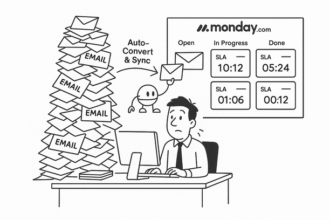
- One triage board. Route all inbound to a single board; mark as P1 (high priority) only if there’s revenue risk within 24 hours—everything else queues.
- Fast templates. Use short acknowledgments that route, schedule, or defer in seconds.
- Team norms + simple metrics. Publish team SLAs and track two numbers: protected hours kept and unplanned pings per week.
Result: fewer pings, faster answers, stronger output.
Aligning Team Norms and Empowering Executive Assistants with Automation
Deep work sticks when norms and automation enforce it. Each context switch costs about 23 minutes; you can’t out-hustle that.
- Response tiers and escalation paths. Define what qualifies as P0 (critical), P1 (high), and standard. Only red‑flags break glass.
- Give your EA (executive assistant) real authority. Provide rules and metrics so your EA can protect the block, enforce norms, and surface exceptions.
- Meeting defaults. Set 25/50‑minute defaults with agendas—or auto‑decline. Your EA enforces so you don’t have to.
- Channel funnels. Route Slack, email, and DMs to a single triage board; batch replies in set windows without losing true urgency.
- One‑toggle status sync. With Monday.com, a single Focus toggle updates Calendar Focus, Slack do not disturb (DND), and auto‑replies.
Outcome: fewer fire drills, cleaner calendars, and a reliable daily 2‑hour block.
Measuring the Impact: Proving ROI and Sustaining Your Deep Work Routine
Deep work compounds when you can prove it. Measure the system that protects your daily two-hour window—and the outcomes it creates. Prove ROI (return on investment) so the habit survives growth and pressure.
- Lead indicators. Track protected hours kept vs. scheduled, context switches, and decision latency.
- Outcomes. Measure cycle time on priorities, error rates, and throughput per block.
- Run one‑week experiments. For example: batch Slack twice daily; auto‑sync Focus via Monday.com to Calendar/Slack—then compare.
- Weekly review with your EA. Look at trends, exceptions, and tweaks to guardrails and triage rules.
- Share wins. Track decisions shipped, cycle time to clarity, and meetings removed; share results monthly.
Result: credible ROI that earns respect and protects strategy time.
Next Steps
For a calm, repeatable system, Lyaxis maps these guardrails and shares ready‑to‑adapt automations—start with the newsletter. If you want to move fast, an optional Monday.com pack removes setup drag so your two-hour block stays protected without daily vigilance.