Introduction: Reclaim Focus by Making Interruptions Visible with Kanban
I’ve watched solid roadmaps slip—not because engineering underperformed, but because Slack quietly became the team’s busiest, least-measured intake channel. I learned the hard way that chaos isn’t the problem—it’s invisibility. The simple fix that restored my focus and my team’s predictability was to put every Slack ping and ad‑hoc ask on a lightweight Kanban board so urgency became visible, negotiable, and schedulable.
Start with a one-week pilot: log every ping, then review the board—not emotions. Make demand visible, set basic service levels, and measure the real trade-offs. With a little structure, fire drills fade and steady flow returns. For field-tested templates and patterns, the Lyaxis newsletter offers quick, practical ideas. When you’re ready for a deeper system to sustain these gains, Impruver University is a practical next step.
Capturing the Invisible: Using Kanban to Map Slack Interruptions and Ad-Hoc Work
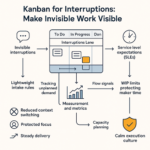
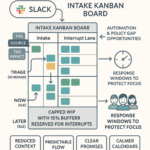
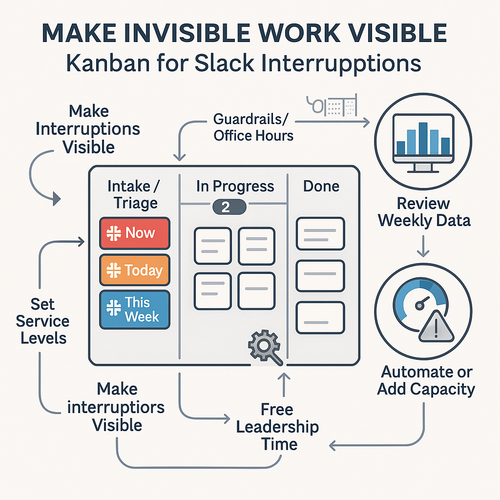
Roadmaps often slip not from engineering effort but from untracked Slack work. Convert every ping into a Kanban card so urgency becomes visible, negotiable, and schedulable. A single triage swimlane turns chaos into a queue; light tags (source, urgency, effort) reveal your true demand mix.
Make unplanned work explicit by turning it into a queue with clear service levels and understood trade-offs. Use service-level bands to set expectations (for example: “Now,” “Today,” “This Week”) while allowing true emergencies to bypass with a visible cost. Add work‑in‑progress (WIP) limits—caps on the number of items in progress—to cut context switching and keep flow steady. Establish quiet hours so planned work gets protected focus. Review weekly patterns to justify automation or capacity with data instead of anecdotes.
Exposing Hidden Waste: How Visualizing Unplanned Work Reveals Real Costs
Slack pings feel small; their cost is not. When you make them visible, the options become obvious and the trade-offs easier to manage.
- Create a Kanban triage lane. Log every ad‑hoc ask and compare arrivals versus completions to expose overload.
- Capture time‑to‑respond and context‑switch cost. Each jump often burns 20–40 minutes and ripples through planned work.
- Tag by source and urgency. Patterns emerge quickly; visible queues enable humane service levels without blocking real emergencies.
Quantify waste: count interrupts and switches; convert them into hours lost to make a clear case for adding capacity or investing in automation. When you can point to the data, decisions get easier and less personal.
Building Humane Intake Policies and Guardrails Without Slowing Down Delivery
9:17 a.m.: a Slack ping hijacks your sprint. That’s not noise—it’s an unmeasured intake channel. Humane guardrails make Slack visible, fast, and fair.
- Single triage lane. Auto‑capture pings to Kanban; size demand versus capacity to expose hidden queues.
- Service levels. Now (one expedite slot), Today, This Week. Promise response times, not instant starts. An “expedite slot” is a small, reserved capacity for true emergencies so everything else can continue to flow.
- Clear escalation and office hours. Define who decides, when to page, and what pauses. Calm beats heroics—and context switching drops.
Keep WIP limits (work‑in‑progress limits) visible and respected so the team maintains steady delivery. A small amount of structure protects focus without slowing legitimate urgency.
From Firefighting to Flow: Using Data-Driven Kanban Insights to Free Leadership Time
If Slack pings chop your day, Kanban makes the invisible visible—and gives leadership time back. Capture each ping as a card in Intake to reveal the true ad‑hoc load and the context‑switch tax.
Use cycle‑time heatmaps and aging WIP to find and fix systemic blockers. “Cycle time” is the time it takes for a work item to move from start to finish; “aging WIP” highlights items in progress that are taking longer than expected. Add a clear triage gate with service levels so urgent work flows without starving planned work. Visible queues align trade-offs and justify capacity or automation with data, not debate.
Want calmer calendars and steadier commitments? Get quick ideas from the Lyaxis newsletter. When you’re ready to operationalize these practices and scale predictability, explore Impruver University. If you’d like a nudge to get started, email lyaxisinc@outlook.com with the subject “Impruver University” for a brief, practical insight.