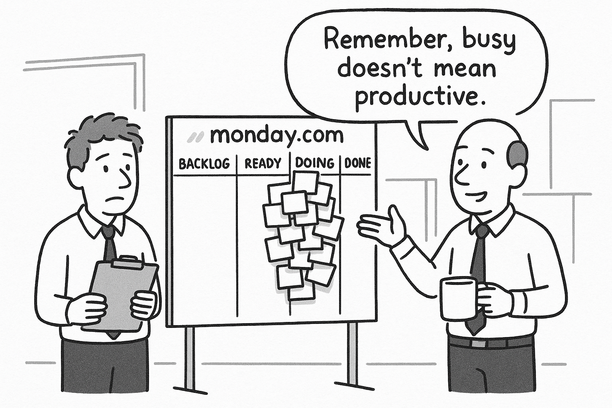
Introduction: Why Office Work Feels Busy Yet Unproductive
After years of leading product and ops teams, I’ve lived the paradox: calendars jammed end to end, Slack and inboxes buzzing, yet deliverables still slip. The turning point came when we stopped blaming motivation and started mapping flow. Once we named the hidden queues, constant task switching, and late feedback, the noise quieted—and outcomes finally caught up with effort.
Calendars stay full while outcomes lag because busy masks broken flow. Naming the forces creates room for calm, predictable throughput.
Unmasking Hidden Queues, Task Switching, and Delayed Feedback
Busy isn’t throughput. Hidden queues, switching, and slow feedback quietly stretch lead time and drain focus.
- Unclear priorities inflate WIP (work in progress): by Little’s Law, more items mean longer lead times.
- Hidden queues and slow approvals stall “in progress”: work idles, disguising risk until it’s urgent.
- Always‑on pings force context switching: focus shreds and cycle time stretches.
- Late feedback pushes defects downstream: rework multiplies and churn rises.
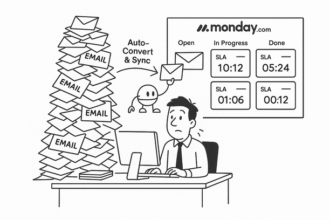
- DMs (direct messages), “waiting on X,” and review piles are queues: make them visible on a Kanban board to reveal delay.
- Each hop taxes cognition: cap WIP so teams finish, then pull.
- Shorten loops with explicit policies: bring review earlier and define SLAs (service-level agreements) for handoffs.
Kanban for Knowledge Work: Boosting Flow, Throughput, and Calm
Kanban reframes work as flow—visualize, limit WIP (work in progress), tighten feedback, track lead/cycle time—and it can be operationalized simply. For a clear, low‑pressure playbook, Lyaxis Field Notes turns busyness into shipped outcomes.
- Visualize: route all requests to one board; queues and blockers become obvious fast.
- Limit WIP: cap “Doing” per role; context switching collapses and lead times fall.
- Manage flow: pull only when capacity exists; small batches and clear policies speed feedback and raise quality.
- Measure: track lead time, cycle time, and throughput weekly.
Operationalize with Monday.com boards and gentle nudges; Lyaxis’ newsletter guides a calm rollout and helps you avoid common pitfalls.
Operationalizing Kanban with Monday.com: Practical Tools and Metrics
Busy but shipping little? Run Kanban in Monday.com to expose queues, cut context switching, and restore predictability.
- Map real flow with clear columns: Backlog → Ready → Doing → Review → Done, with status and owners so stuck work is obvious.
- Set WIP limits with groups and automations: over‑limit and approval pings create focus without friction and flag stalls early.
- Add swimlanes by client or squad: reveal hidden queues, aging items, and where pull beats push.
- Tighten feedback loops: use explicit policies and earlier review; define SLAs (service‑level agreements) for handoffs.
- Track the right metrics on dashboards: cycle time, lead time, and weekly throughput so trends guide bets, not anecdotes.
For the exact board layout and alert recipes, browse the practical patterns in the Lyaxis Field Notes newsletter.
Finding Relief: Starting Small, Measuring Impact, and Scaling Smoothly
Busy isn’t productive; flow is. Start a tiny Kanban pilot to expose hidden queues, cut task‑switching, and restore calm.
- Pick one stream and one metric: choose lead time and baseline it for two weeks.
- Visualize everything and cap WIP: put every card on a Monday.com board; focus spikes and throughput climbs.
- Tighten feedback loops: simple SLAs (service‑level agreements) and automations nudge approvers; cycle time shrinks.
- Remove one friction each week: eliminate duplicate tools, unclear handoffs, or vague policies; watch cumulative flow steady.
- Scale with intention: when stable, clone the pattern to adjacent teams using templates and guardrails.
Want quiet, proven patterns? Browse the bite‑size examples in the Lyaxis newsletter. Small tests, measured gains, confident scale.