Introduction: Tackling Overtime and Hidden Capacity Bottlenecks
I’ve lost count of the weeks that ended with “just one more push,” only to realize the real culprit wasn’t effort—it was invisible overallocation. Overtime creeps when plans ignore real capacity and bottlenecks quietly choke flow. The cost: burnout, missed SLAs (Service Level Agreements), and margin drag. The fix wasn’t heroics; it was seeing true constraints early and aligning work to what the team could actually deliver.
- Early signals: role spikes, after‑hours repeats, and last‑minute swaps that mask overloaded people and hidden queues.
Understanding Capacity-Loaded Planning: Aligning Work to Real Team Capacity
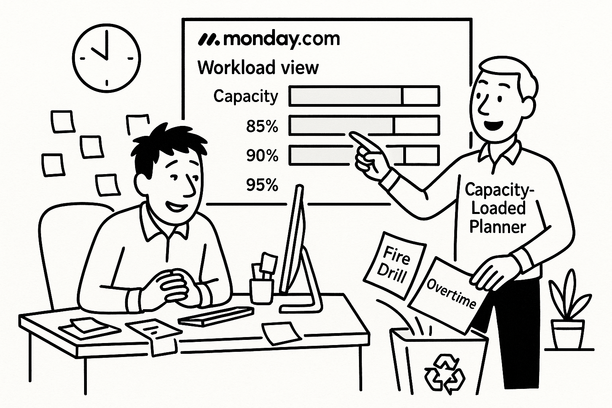
Capacity‑loaded planning assigns work to the hours and skills you actually have, cutting overtime by roughly 25% without slowing delivery. Plan to capacity, not headcount—cap planned load to 85–95% by skill and shift so buffers absorb the real world without jeopardizing throughput or morale.
- Plan within real limits: cap to 85–95% by skill/shift; well‑placed buffers cut overtime ~25% without hurting throughput.
- Set WIP limits: establish WIP (Work In Progress) limits by role so new starts wait for blockers to clear.
- Protect true constraints: right‑size buffers at the actual bottlenecks and critical paths—not every task.
- Clarify handoffs: use clear done‑criteria and required skills to end fire drills and misaligned expectations.
- Make keepable promises: model demand vs capacity 2–6 weeks out; move work, not people, so SLAs (Service Level Agreements) hold.
Forecasting matters: compare demand vs capacity weeks ahead and quantify savings so Finance can see the impact. The result is steadier commitments, fewer fire drills, and predictable margins.
How Monday.com Workload Views Bring Clarity to Workforce Allocation
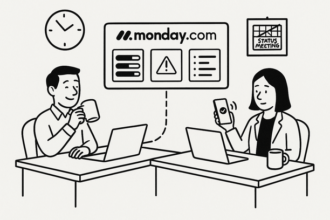
Overtime often hides in invisible overallocation. Monday.com Workload makes capacity a live signal so plans match reality. Set per‑person capacity and effort; colors reveal slack and strain at a glance. Rebalance fast to open bandwidth, guarding SLAs (Service Level Agreements) without extra hours. See weeks ahead by team or skill to preempt bottlenecks and burnout—teams report about 25% less overtime and steadier margins from one shared view.
- Live capacity view: set hours and effort per person; instantly see over/under to rebalance before fire drills.
- Proactive forecasting: scan 2–6 weeks ahead by role or skill to spot constraints early.
- One shared truth: align planning, delivery, and Finance on the same workload picture to protect margins.
If you’re ready to try a light, proven setup, explore a workload template with Monday.com here: Monday.com workload template.
Reducing Overtime by 25% While Protecting Throughput and Morale
Overtime isn’t a badge; it’s a signal of overcommit and hidden queues. Align work to real capacity and you can cut overtime by roughly 25% without denting throughput or morale. Plan to capacity, not headcount—Monday.com Workload surfaces over/under in real time so you rebalance instead of burning weekends. Forecast 2–6 weeks out to shift dates or add surge help early, and clarify handoffs with explicit done‑criteria and skills.
- Rebalance early: resolve role spikes and after‑hours repeats in one screen before they become fire drills.
- Smooth weekends: use buffers at constraints and WIP (Work In Progress) limits to protect people and SLAs (Service Level Agreements).
- Protect margin and morale: move work, not people; create steadier weeks and more predictable delivery.
Lyaxis codifies this into reusable operating notes—and a lightweight setup—so overtime falls and margin steadies. For a concise overview of patterns to watch, explore the Lyaxis Operations (Ops) Return on Investment (ROI) brief: Lyaxis Ops ROI brief.
Building a Sustainable Planning Cadence with Executive Dashboards and Automation
Overtime isn’t heroics—it’s planning tax. Pair executive dashboards with light automation so tradeoffs surface before fire drills and Finance trusts the numbers weekly.
- Capacity‑loaded planning: plan to real hours and cap at 85–90% to cut overtime ~25% without missing SLAs (Service Level Agreements).
- Monday.com workload: live skill capacity in one place; rebalance in clicks and retire fragile spreadsheets.
- Forward signal: 2–6 week demand vs capacity with automatic alerts—options, not surprises.
- Executive dashboard: margin, utilization, overtime, and SLA risk in one Finance‑trusted view; quantify labor ROI (Return on Investment) weekly.
For a calm, repeatable cadence, start with Lyaxis’ 10‑minute Operations (Ops) ROI (Return on Investment) brief, then lock in stable delivery with a light workload setup: Lyaxis Ops ROI brief. Result: fewer late nights, steadier margins, and trust that compounds each cycle.