Introduction: Turning Backlog Chaos Into a Reliable Weekly Plan
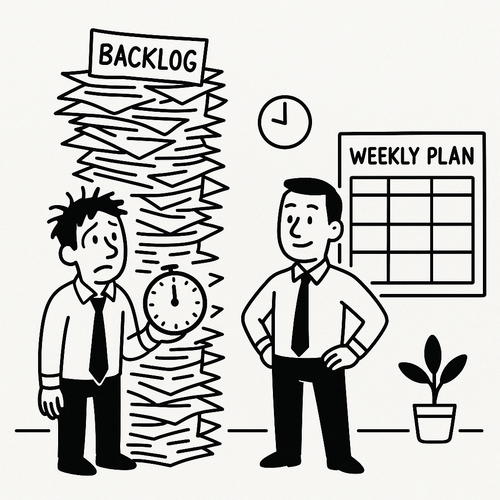
On more Monday mornings than I can count, I stared at a ballooning backlog and wondered how to turn it into a sane, one-week plan without spending half the day in meetings. What finally stuck was a 60-minute routine in monday.com that transforms noise into a reliable, timeboxed plan—one my team actually trusts.
Backlogs balloon; weeks slip. You need a 60-minute path from noise to a reliable, timeboxed plan in monday.com.
- Convert the backlog into a weekly template: This Week/Next, priority, effort, owner.
- Surface conflicts with dependencies and capacity: Overcommitment stops early.
- Automations spin up recurring work and status nudges: Leaders track without chasing.
- My Work centralizes actions: Timeboxing and WIP (work in progress) limits protect focus.
- Views—Owner, Critical Path, Blocked: Instant executive clarity.
Outcome: fewer fire drills, on‑time delivery, calmer Mondays. Lyaxis turns this into your rhythm—start with our planning brief in the Lyaxis newsletter, then, if useful, peek at the monday.com starter board.
Streamline Weekly Planning with monday.com Templates and My Work
Turn backlog sprawl into a steady weekly rhythm with monday.com templates and My Work. Here’s the practical flow for a fast, dependable plan.
- Spin up a Week board from a template: Owners, timelines, and recurring tasks pre‑filled.
- Pull backlog with dependencies: Timeline/Workload exposes conflicts and capacity, so plans stay realistic.
- Automations move statuses, due dates, and handoffs: Leaders review exceptions in My Work.
- Retros tighten the template each Friday: Bake in what worked.
Net: fewer fire drills, on‑time delivery, and protected focus. Get the quiet, proven setup in the Lyaxis newsletter; an optional monday.com starter board is included.
Map Dependencies and Automate Recurring Tasks to Prevent Bottlenecks
Hidden delays live in handoffs. Map dependencies once, then let automations handle the repeats so the week runs itself.
- Use a monday.com template with Timeline + Dependencies: Dates auto‑shift and critical steps surface before they slip.
- Pull backlog items into a This Week group: Capacity and blockers are obvious in My Work by owner.
- Automations create recurring rituals each Monday: Assign owners, set due dates, and flip status when predecessors complete.
- Alerts replace chase‑the‑update meetings: Conflicts show early, not on Friday afternoon.
Takeaway: steadier throughput and protected focus. The exact setup is unpacked in the Lyaxis newsletter, with an optional monday.com starter board inside.
Protect Focus and Maintain Visibility with Capacity and Priority Signals
Focus needs guardrails. Clear capacity and priority signals turn backlog into a realistic weekly plan.
- Capacity at a glance: Workload View and rollups show who’s full before you commit.
- Priority lanes: Template columns and SLA (service‑level agreement) dates flag what must ship this week.
- Dependency alerts: Predecessors gate starts; automations shift dates to prevent collisions.
- Recurring work: Templates spawn tasks; My Work centralizes action.
- Stakeholder visibility: Dashboards replace check‑ins.
Want the blueprint? Lyaxis can configure these signals fast and share the reasoning in a short newsletter, with an optional monday.com starter board. Result: fewer fires, protected focus, on‑time delivery.
Conclusion: Simplify Your Workflow and Gain Clarity with monday.com Insights
See bottlenecks, standardize the week. monday.com turns backlog noise into a plan you trust—without more meetings.
- Templates lock cadence and scope: Planning drops from hours to minutes.
- Dependencies surface conflicts early: Teams stop overcommitting.
- Automations run recurring work and updates: Leaders regain focus time.
- My Work centralizes action: Priorities are obvious at a glance.
- Dashboards expose capacity and slips: Delivery becomes predictable.
Prefer insight over hype? Browse the Lyaxis newsletter for quiet, practical plays; when useful, peek at our monday.com starter board. Result: fewer fires, steadier throughput, and a calmer path to goals.