Introduction: Harnessing Kanban to Manage Interruptions and Hidden Work
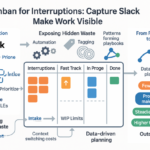
After too many weeks where Slack pings melted my plans, I learned the hard way that interrupts aren’t noise—they’re unplanned demand. Once I treated them that way, Kanban turned chaos into clarity. It made the invisible visible, protected focus, and let me make promises I could keep. The shift was simple: one visible queue for ad‑hoc asks, explicit “yes, later” rules, a small buffer for emergencies, and clear expectations. The result was calmer flow, steadier delivery, and fewer late‑night scrambles.
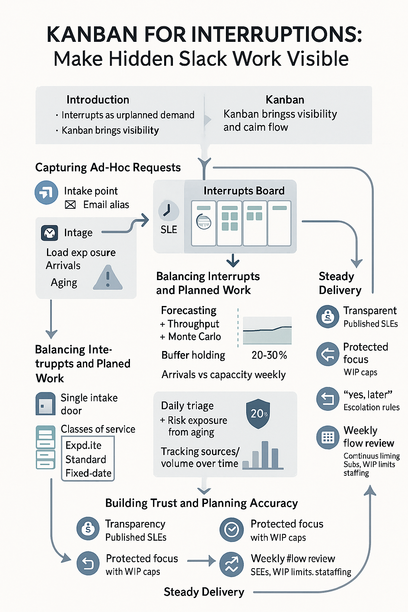
Capturing Ad‑Hoc Requests: Making Invisible Work Visible Without Interrupting Flow
Ad‑hoc pings hide demand and torch focus—each can cost 20 or more minutes to recover. Kanban makes them visible without breaking flow.
- Create one intake: a Slack shortcut or email alias posts to an Interrupts board. Pings become cards in seconds.
- Triage with SLEs (service level expectations): tag impact and due‑by, route sanely, and say “yes later” with confidence.
- Protect maker time: cap WIP (work in progress), reserve a small interrupt buffer, and forecast capacity visibly.
- Expose load: track arrivals, aging, and expedite percent. You’ll defend forecasts and headcount with evidence.
For practical, bite‑size walkthroughs, browse the Lyaxis newsletter. If you want a deeper, structured path, consider Impruver University.
Balancing Interrupts and Planned Work: Using Kanban to Forecast and Set Reliable Expectations
Surprises don’t have to blow up plans. Kanban helps you forecast both interrupts and planned work so you can say when with confidence.
- Pipe Slack pings into an Interrupt lane: track arrival rate and cycle time to understand true demand and flow.
- Hold a 20–30 percent buffer: protect maker time with WIP limits and a “yes, later” policy.
- Use throughput and Monte Carlo simulations (random‑sampling forecasts): set SLEs—e.g., two days at the 85th percentile for quick asks.
- Compare arrival versus capacity weekly: surface hidden demand to defend resourcing and adjust plans.
For field‑tested patterns that unpack buffers and SLE math, the Lyaxis newsletter offers small, practical doses. You can go further with Impruver University.
Designing Lightweight Intake and Triage Policies to Protect Focus and Stabilize Delivery
Interrupts can derail plans. A lightweight intake and triage policy protects focus and makes trade‑offs fair and visible.
- One door: route Slack or email into a visible Kanban; auto‑create a card—no side DMs (direct messages).
- Classes of service: Expedite (rare), Standard, Fixed‑date. Publish SLEs so most get “yes—later” with a clear window.
- Capacity guardrail: reserve about 20 percent for interrupts; when full, defer confidently and justify resourcing.
- Ten‑minute daily triage: accept, clarify, or decline; aging exposes risk before work blows up.
- Track sources and volume: forecast better and reveal hidden work patterns across teams and time.
Need templates and simple SLE calculators? You’ll find them regularly in the Lyaxis newsletter. For deeper dives, Impruver University is an optional next step.
Building Trust and Planning Accuracy Through Transparency, SLEs, and Continuous Improvement
Trust follows visibility, explicit expectations, and steady improvement. Kanban tames Slack pings so planning stops guessing and stakeholders know what to expect.
- One visible queue: route Slack and email to a single board; show arrivals versus capacity each day.
- Set SLEs, not promises: for example, triage within two hours, resolve within 48 hours—and publish the percent met.
- Protect focus with structure: add an Interrupt lane with a tight WIP cap; protect maker time elsewhere.
- Adopt “yes, later” rules and an escalation path: when truly urgent, use Expedite; otherwise, standard flow applies.
- Review flow weekly: tune SLEs, WIP limits, and staffing based on arrivals, aging, and delivery performance.
These moves reduce derailments, make headcount defensible, and produce calmer, faster delivery. For steady, no‑pressure guidance, browse the Lyaxis newsletter—and if you want a structured curriculum to institutionalize these practices, explore Impruver University.