Introduction: Mastering Balanced Throughput with Takt Planning
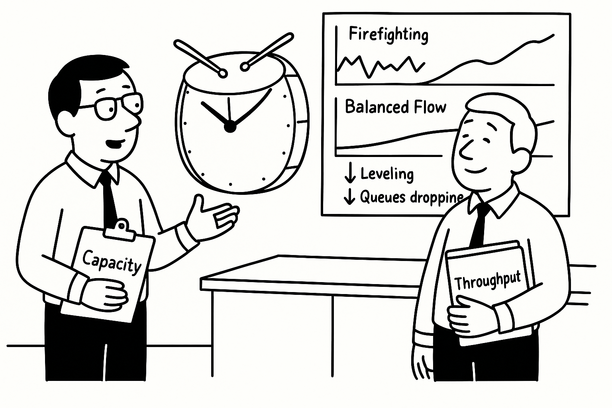
In my experience, every time a team slid into firefighting, the root cause wasn’t effort—it was imbalance. The moment we set a shared drumbeat and planned to takt time (the pace of customer demand), throughput balanced, overload fell, and delivery became predictable.
Takt planning sets a shared drumbeat so teams deliver at the rate customers need. When cadence is steady, throughput balances, overload falls, and delivery gets predictable.
- Align to demand: convert demand to takt; size slots to it; queues and lead time drop ~30%.
- Level across functions: expose the constraint and rebalance, not hire.
- Stabilize flow: WIP (Work in Progress), handoffs, and blockers become visible each interval; expedites fade.
- Forecast confidently: cadence reveals true capacity for reliable commits.
For calm, practical patterns that help you install this drumbeat, explore the Lyaxis newsletter. When you’re ready to go deeper and make it stick, consider Impruver University.
Aligning Teams to the Shared Drumbeat: The Power of Takt Time
Takt time sets a shared drumbeat—the rate customers need value—so engineering, design, and operations (ops) move in sync. When the beat is clear, handoffs tighten and queues fade.
- Demand sets the tempo; capacity levels to it, lifting throughput without new hires and trimming lead time 20–30%.
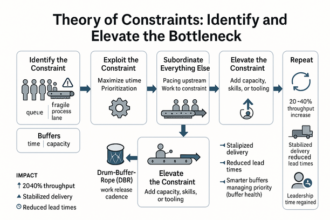
- One beat exposes the real bottleneck fast, replacing firefighting with focused fixes.
- Smaller, even batches keep time, reducing context switching and rework.
- Forecasts become math, shifting metrics from utilization to flow.
See usable cadences in the Lyaxis newsletter, and deepen your practice with Impruver University when it fits.
Capacity Leveling and Heijunka: Smoothing Demand to Cut Queues
Capacity leveling and heijunka (production leveling to smooth volume and mix) turn erratic demand into a steady drumbeat (takt), so work flows without burnout. When teams pace to takt, queues shrink and promises stick.
- Align every team to a shared takt; it kills multitasking thrash.
- Mix work by volume and variety daily; heijunka smooths spikes without adding headcount.
- Cap WIP (Work in Progress) and right-size batches; lead time typically drops ~30% and expedites fade.
- Expose bottlenecks; rebalance capacity.
- Forecast by capacity buckets, not wishful utilization.
Want the cadence? Explore practical moves in the Lyaxis newsletter, and deepen with Impruver University.
Revealing Bottlenecks and Boosting Flow Efficiency Across Functions
When value stalls, it’s rarely effort; it’s imbalance. Set a shared takt—the demand drumbeat—to synchronize functions and surface constraints.
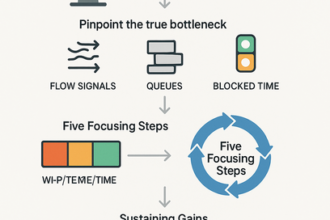
- Map queues and measure flow efficiency (active time ÷ lead time) to reveal waits that dwarf touch time.
- Level capacity to takt: rebalance staffing, WIP (Work in Progress), and handoffs; drop utilization goals that create queues.
- Protect cadence with right-sized buffers; cut expedites and context switching.
- Review the bottleneck at the drumbeat; swarm, re-sequence, and watch lead time drop ~30% without new hires.
Hands-on mapping guides await in the Lyaxis newsletter. When you’re ready, Impruver University helps you lock in the practice.
From Firefighting to Forecasting: Predictable Delivery with a Unified Cadence
Firefighting signals mismatched rhythms. A unified takt—the shared drumbeat—aligns work to demand and makes forecasts stick.
- Level capacity to takt across functions; queues contract and context switching fades.
- Expose the constraint with clear WIP (Work in Progress) and buffer signals; the beat holds as work flows.
- Plan to cadence, not 100% utilization; throughput climbs without new headcount.
- Forecast by drumbeat; variability becomes manageable and promises hold.
For gentle routines and executive visuals that reinforce the beat, explore the Lyaxis newsletter. And when you’re ready to harden the system and scale the practices, Impruver University makes it stick. Net: shorter queues, faster lead times, and leadership time back.